Following a review of twenty-seven cases by His Majesty’s Inspectorate of Constabulary and Fire and Rescue Services (HMICFRS), the watchdog found that the police service still does not have an accurate understanding of ‘grooming gangs’, despite many years of concerns about the problem, dating back to the turn of the century.
In its most recent report, HMICFRS says it found data collection unreliable and intelligence gathering not prioritised. The watchdog, in line with a previous Home Office report, also found most offenders were white, despite the concerns of some leading politicians, including the recently deposed Home Secretary, about ‘Asian grooming gangs’.
This will particularly disappoint conspiracy theorists in local authority catchments such as Oldham, in Greater Manchester’s policing area. GMP, since its grotesque failings, dating back to 2005 at least in Rusholme and Rochdale, were relentlessly and forensically exposed, is now one of the acknowledged leaders in prevention and investigating child sex abuse and exploitation.
A national taskforce, with a wider ranging remit to deal with the grooming gangs issue, was ordered by the Home Office in April, 2023. Following on from this, an experienced and very well regarded Inspector of Constabulary, Wendy Williams, says of the police service, more generally, “the pace of change needs to increase, and this starts with understanding the problem”.
In its report published earlier today (8th December, 2023), HMICFRS said:
“It cannot be overstated how complex and challenging these crimes can be to prevent and investigate, and the police can’t tackle them alone.
“In 2013, the Home Affairs Select Committee was able to report that child sexual exploitation was a ‘large-scale, nationwide problem’, which was increasing.
“With such a stark warning, we expected to find, 10 years later, that the police and other organisations had a greater understanding of the problem and had developed effective responses to protect children.
“In many respects, we were disappointed. We found that an accurate view of group-based child sexual exploitation still wasn’t available to the police service, data collection was unreliable, and intelligence gathering wasn’t prioritised.”
“Most forces weren’t gathering data and intelligence on these crimes.”
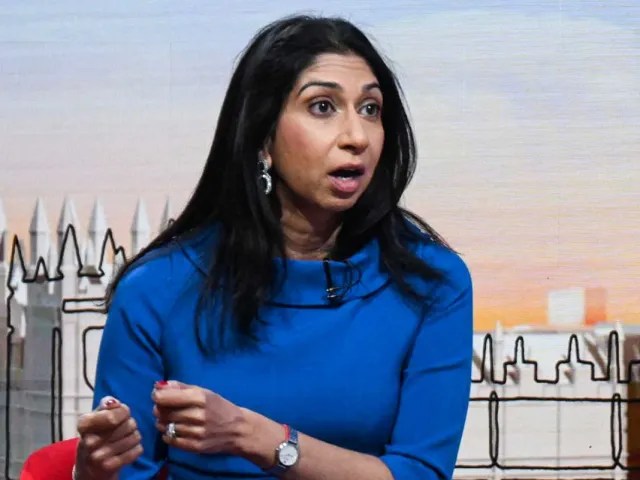
Angry debates over the ethnicity of those involved have re-ignited over the course of the past six months: In April, the disgraced former Home Secretary, Suella Braverman (pictured above), drew attention to her perception of the overwhelming involvement of British-Pakistani men, pointing to the well publicised cases in Rochdale, Rotherham and Telford.
By contrast, HMICFRS found, of the twenty-seven investigations it inspected, “the most common ethnic group of offenders was white; the next most common ethnic group was Asian or British Asian. Other ethnic groups were also represented in the sample”.
Most disappointingly, the inspectorate did not give further details, name the forces it involved nor explain why they were being shielded from criticism. It also said “our sample size isn’t fully representative”.
“We know that child sexual exploitation, group-based or otherwise, extends far beyond the confines of towns and cities with a high concentration of residents of South Asian heritage,” the report said.
“Therefore, data collected at that time might be inaccurate and of little value,” the watchdog reported.
It recommended the Home Office adopt a more consistent way of tracking abuse by grooming gangs.
Of the twenty-seven police investigations examined by the watchdog, nine were assessed as “good”, fourteen as “requiring improvement” and four as “inadequate.”
It highlighted the use of officers who were not specialised in sexual abuse investigations, warning that they often lacked experience and training. In one case, key evidence from mobile phones was not examined for a year.
It also raised concerns about “victim blaming” by the police, often seen as a reason in the past for young people who have been abused not coming forward.
In another case reviewed by HMICFRS, a child and her friend who were being exploited by a 30-year-old man were themselves initially arrested before officers reversed course and began treating them as victims.
The inspectors also found “inappropriate language” was used on a few occasions in the three of the six forces they examined more closely.
One example, relating to a young female victim, was a note that concerns had been raised due to “her general proclivity with older men”. In another case, a missing child was described as “medium-risk due to age – streetwise and tends to return the next day”. In another case, a child was described as “putting herself in precarious situations”, while another child was described as a “difficult victim to engage with”.
The inspectorate said: “Victim-blaming language indicates that some police personnel don’t understand the vulnerability of children. It means that responses to protect and help them are at times inadequate and risk is missed.”
The National Police Chiefs Council (NPCC) accepts that there is still a problem with “victim blaming”, but claims the new national police taskforce was now supporting forty investigations nationally, advised by a Crown Prosecution Service specialist unit.
Chief constables have also criticised a decision by large technology firms, including Meta (Facebook), to enact end-to-end encryption, which law enforcement believes will help shield serious criminals, including sexual predators.
A “staggering” number of reports of child sexual exploitation are received every month by the NPCC and uncovered 800 suspects and identified 1,200 children as potential victims. A large number of these came from Meta-owned sites and apps including WhatsApp, Instagram and Facebook.
The NPCC lead for child protection, Deputy Chief Constable Ian Critchley, adds:
“We will not be complacent, and we recognise there is still more to be done as highlighted in this report.”
“We will continue to listen to victims and use these recommendations to support our improvements with forces across the country.”
More BBC reading:
- What do we know about grooming gangs’ ethnicity?
- Political correctness aiding grooming gangs – PM
- Braverman grooming claim misleading
Follow Neil Wilby on Twitter (here) and Neil Wilby Media on Facebook (here) for signposts to any updates.
Page last updated: Friday 8th December, 2023 at 1105 hours
Thank you for reading and a polite request: If you feel this article is of value and in the public interest, and wish to make a contribution to the running costs of this website, it would be very much appreciated. Donations can made securely (and anonymously if required), via Buy Me A Coffee at this link or via PayPal at this link.
Corrections: Please let me know if there is a mistake in this article. I will endeavour to correct it as soon as possible.
Picture credit: BBC
Right of reply: If you are mentioned in this article and disagree with it, please let me have your comments. Provided your response is not defamatory it will be added to the article.
© Neil Wilby 2015-2023. Unauthorised use, or reproduction, of the material contained in this article, without permission from the author, is strictly prohibited. Extracts from, and links to, the article (or blog) may be used, provided that credit is given to Neil Wilby Media, with appropriate and specific direction to the original content.
 Neil Wilby Media
Leave a comment