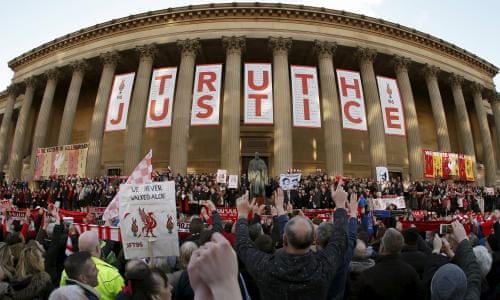
A long-awaited investigation by the Independent Office for Police Conduct (IOPC) into the background to the 1989 Hillsborough Disaster has upheld dozens of misconduct claims against former officers from South Yorkshire Police (SYP) and West Midlands Police (WMP).
 
However, in a decision that has left survivors and bereaved families reeling, the watchdog has confirmed that no officers will face disciplinary proceedings due to legal constraints tied to the absence of a “duty of candour” at the time of the tragedy.
 
The findings, released earlier this week, have re-ignited a fierce debate over accountability and fuelled demands for legislative reforms, including the proposed “Hillsborough Law,” which would impose a statutory obligation on public servants to be truthful in the aftermath of such disasters.
 
The Disaster, which unfolded on 15th April, 1989, during a televised FA Cup semi-final between Liverpool and Nottingham Forest at Sheffield Wednesday’s Hillsborough Stadium, remains the deadliest tragedy in British sporting history: A lethal crush, in some of the overcrowded and controversial Leppings Lane caged pens, claimed the lives of 97 Liverpool supporters, with hundreds more injured and countless others left traumatised.
 
For decades, survivors, families, justice campaigners and lawyers have fought to uncover the truth, battling a false narrative propagated by South Yorkshire Police, opened whilst fans lay dying, that blamed drunken, ticketless Liverpool fans for the catastrophe—a narrative debunked by multiple inquiries, including, most notably, the new inquests, that concluded in 2016, that ruled the deaths were unlawful killings caused by gross negligence.
 
The IOPC investigation, launched in 2012 following the Hillsborough Independent Panel’s damning report, is the largest independent probe into alleged police misconduct and criminality ever conducted in England and Wales. Spanning well over a decade, it examined 354 complaints from nearly 100 individuals, including bereaved relatives and survivors.
 
In letters sent to families this week, IOPC Deputy Director General Kathie Cashell revealed that dozens of allegations had been substantiated. These included claims of excessive force and abusive behaviour by South Yorkshire officers toward supporters at the match, as well as misconduct by West Midlands officers during their initial investigation into the disaster. Some senior SYP officers were also, unsurprisingly, found culpable for failures in the planning and policing of the event.
 
Yet, despite these findings, Ms Cashell’s letter delivered a bitter blow: No disciplinary action will follow. The reason? Most implicated officers have long since retired—many before 2017, when legislative changes allowed for retrospective proceedings—and policing’s Professional Standards in 1989 did not include a specific “duty of candour.”
 
This meant that, legally, South Yorkshire Police were permitted to “present their best case” and selectively control evidence in the disaster’s aftermath, even as they deflected blame onto innocent fans. “In the majority of cases, we were unable to find the officers had a case to answer for misconduct,” Cashell wrote, acknowledging the public’s frustration but citing the legal framework of the time as an insurmountable barrier.
 
The decision has provoked outrage among campaigners who see it as yet another chapter in a 36-year saga of obfuscation and impunity. Louise Brookes (better known as “Lou”), whose brother Andrew died at Hillsborough, spoke of her mixed emotions: “It’s a relief to see the IOPC finally admit some of what we’ve known all along, but it’s gut-wrenching to hear those responsible won’t face justice after all we’ve endured.” Her words reflect a broader sense of betrayal among those who have spent decades seeking accountability, only to be told the system cannot—or will not—deliver it.
 
The IOPC’s findings align with the 2016 inquests, which concluded that no behaviour by Liverpool supporters contributed to the disaster and placed responsibility squarely on police mismanagement, notably by match commander Chief Superintendent David Duckenfield.
 
Duckenfield was acquitted of gross negligence manslaughter in 2019, a verdict that stunned many, including the author of this article, Neil Wilby, who was present in the press seats for almost every day of that Preston Crown Court trial.
 
Other legal efforts have similarly faltered: Former SYP officers, Donald Denton and Alan Foster, alongside solicitor Peter Metcalf, were cleared of perverting the course of justice in 2021, whilst ex-Sheffield Wednesday club secretary, Graham Mackrell, remains the only individual convicted, fined £6,500 in 2019 for Health and Safety Act breaches.
 
For many, the IOPC’s latest announcement feels like the final nail in the coffin of hopes for personal accountability for what, on any independent view, was persistently egregious conduct by at least two police forces.
 
Ms Cashell expressed regret over the outcome, before admitting the investigation—spanning over 11,000 lines of inquiry, 5,000 statements, and 215,000 documents—had “taken too long.” But, apart from standard incompetence that has bedevilled its inception under its former title, The Independent Office for Police Conduct (its name was changed in 2018 to deflect its toxicity), no explanation for that delay is provided.
 
She noted that just over half of complainants had at least one allegation upheld, but the inability to pursue disciplinary measures underscored a systemic flaw. “Survivors, bereaved families, and all those who have campaigned for truth deserve better,” she wrote, throwing her support behind legislative reform. Specifically, the IOPC has endorsed the introduction of a “Hillsborough Law,” a measure championed by families and backed by the present Labour government, that has pledged to enact it by the Disaster’s next anniversary on April 15, 2025.
 
The proposed Hillsborough Law would establish a legal duty of candour for all public servants, compelling them to cooperate fully and transparently with investigations and inquiries. Advocates argue it would prevent the kind of defensive posturing seen after Hillsborough, where SYP sought to “control evidence” and shift blame—a tactic Ms Cashell confirmed but the IOPC could not penalise under 1989 standards.
 
Elkan Abrahamson, solicitor and director of the Hillsborough Law Now campaign, emphasised the urgency: “We’ve told the government this law must have teeth—criminal sanctions for those who lie or obstruct justice. Nothing less will do.”
 
The absence of a duty of candour in 1989 has emerged as a lightning rod in this debate. Critics question why police were allowed to prioritise reputation and self-preservation over truth, especially when the stakes involved 97 lives and a grieving community.
 
South Yorkshire Police Chief Constable, Lauren Poultney, issued an “unreserved apology” this week, accepting the IOPC’s findings and acknowledging the force’s “fundamental failures.” Yet her words ring hollow for many, who see them as a belated gesture in a pattern of institutional evasion. “This should not have happened,” Poultney added, referring to the decades-long fight for answers, but her statement offers little solace to those who feel justice remains out of reach.
 
The IOPC’s conclusions have also drawn scrutiny for what they omit. Whilst the watchdog upheld complaints of abusive conduct and policing failures, it largely dismissed allegations that officers systematically sought to “deflect blame” as prosecutable misconduct, again citing the lack of a candour obligation. This has led some to question whether the investigation, despite its scale, was too narrow in scope or too deferential to historical legal norms. Debbie Caine of Hillsborough Law Now welcomed the IOPC’s support for reform but warned of “opposition to a duty of candour applying to all public officials,” urging the government to resist any dilution of the promised legislation.
 
Richie Greaves, a Pen 3 survivor at Hillsborough, and, for so long, in the vanguard of the fight to set the record straight has, rightly, some suitably harsh words on the IOPC outcomes: “There is no British justice. Farcical law, which allows police officers to lie, scuppers potential criminal proceedings against cover-up cops…..”
 
As families await individual complaint outcomes, promised by 28th March, 2025, the broader implications of the IOPC report loom large. It lays bare a paradox: misconduct can be proven, yet accountability remains elusive. For campaigners, the Hillsborough Law represents a last hope to break this cycle—not just for their own cause, but for future generations facing similar tragedies.
“We need the Hillsborough Law now, so no one else has to fight like this for the truth,” Lou Brookes said, steadfast in her determination to see justice done, despite decades of anguish.
 
In Sheffield and Liverpool, where the scars of 1989 still linger, the IOPC’s findings are a sombre reminder of a wound unhealed. The question now is whether Parliament will act decisively or if the legacy of Hillsborough will remain one of truth without consequence.
 
For the 97, their families, and two cities that remember, the clock is ticking.

Neil Wilby concludes: “I campaigned alongside bereaved families and, particularly, survivors from 2011. Many of both groups, together with fellow campaigners and lawyers, becoming personal and treasured friends.

“A year later, the HIP report gave great hope that justice would be served on those responsible for the Disaster and its shocking aftermath. The jury findings at the new inquests underscored that guarded optimism, despite the IPCC, as they were styled then, demonstrating their incompetence on an almost daily basis in Warrington.”

“But those hopes unravelled almost completely in Preston Crown Court, where for over two years I attended almost every sitting day of the criminal trials of Duckenfield and Mackrell. Again, the watchdog (now operating under the IOPC banner) badly let down bereaved families and survivors with a weak investigation and misconceived strategy, which included putting up the witness central to their case as an ‘expert’ when it was quickly exposed in cross-examination that he was not.

“The subsequent failed trials of Denton, Foster and Metcalf were a foregone conclusion: Prosecutors don’t need a million pages of documents to support a successful prosecution, and another million pages in the unused schedules. Defence counsel couldn’t believe their luck, both in terms of the amount they would collect in fees dealing with the paper mountains created by the IOPC but the paucity of evidence and the consequent weakness of the prosecution arguments.”

“Hillsborough Law is a definite, but the fear is it will be watered down, but equally crucial is the IOPC is dissolved and replaced. In 16 years of holding them to account, I’ve yet to come across a bereaved family, in any sphere, that would declare they were satisfied with a watchdog investigation.”

Page last updated: Thursday 13th March, 2025 at 08h15

Photo Credits: Liverpool Echo

Corrections: Please let me know if there is a mistake in this article. I will endeavour to correct it as soon as possible.

Right of reply: If you are mentioned in this article and disagree with it, please let me have your comments. Provided your response is not defamatory it will be added to the article.

© Neil Wilby 2015-2025. Unauthorised use, or reproduction, of the material contained in this article, without permission from the author, is strictly prohibited. Extracts from, and links to, the article (or blog) may be used, provided that credit is given to Neil Wilby, with appropriate and specific direction to the original content.  

Leave a comment

Trending