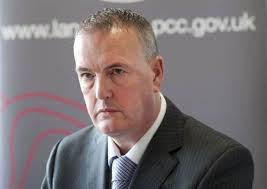
Clive Grunshaw is a Labour politician who served as Lancashire’s first Police and Crime Commissioner (PCC) from 2012 until 2021, and returned to the post in May 2024.
As PCC, his role is to be the “public voice” holding Lancashire Constabulary to account on behalf of residents. Over his two non-consecutive terms, Grunshaw has touted improvements in policing – even noting that under his watch the force was rated “outstanding” for efficiency.
However, his tenure has also been marked by several controversies and allegations that he fell short in ensuring transparency and robust oversight of the constabulary.
Grunshaw’s first term began under a cloud of controversy surrounding his past expense claims. In late 2012, a Freedom of Information Act request revealed apparent double-claimed mileage expenses from his time as a county councillor and police authority member. Political opponents accused him of effectively “being in two places at once” on paper and demanded his resignation.
The issue prompted Lancashire’s Police and Crime Panel to refer the matter to the Independent Police Complaints Commission (IPCC) for investigation. By September 2013, the Crown Prosecution Service (CPS) had launched a formal inquiry, leading the Labour Party to suspend Grunshaw pending the outcome.
After more than a year of investigation, Grunshaw was ultimately cleared of criminal wrongdoing. In January 2014 the CPS announced it would not prosecute, finding insufficient evidence of any deliberate dishonesty in the mileage claims.
Investigators concluded the errors were likely due to carelessness rather than fraud – noting, for instance, that Grunshaw had failed to claim some expenses he was entitled to, suggesting no intent of personal gain. Grunshaw welcomed the outcome, but criticized the IPCC for the “way too long” delay in publishing its report on the matter.
Whilst he was exonerated legally, the highly publicised expenses affair raised early questions about his transparency and integrity, and damaged public trust in his office during its formative years.
Throughout his tenure, Grunshaw faced tests in holding the force to account during controversial policing operations. One notable example was the policing of anti-fracking protests in Lancashire in 2017. Lancashire Constabulary’s response to sustained protests at a Cuadrilla drilling site drew complaints from activists about “police brutality” and heavy-handed tactics.
Rather than openly challenging the force on these concerns, Grunshaw publicly defended the police. He stated he had “yet to see evidence” of any brutality, despite a number of video clips going viral on the internet, and suggested that any undue aggression was caused by protesters “from outside the area” who were undermining the good relations local activists had with police.
This stance – effectively downplaying or dismissing allegations of police misconduct – frustrated campaigners. Advocacy groups like Netpol (Network for Police Monitoring) expressed disappointment, noting that the PCC, “who is supposedly responsible for holding his force to account,” appeared to simply echo the constabulary’s excuses instead of scrutinising its behaviour.
Grunshaw’s alignment with the police narrative in this incident invited criticism that he was unwilling to challenge the force even amid credible public concerns, raising serious doubts about his commitment to impartial oversight.
By the end of Grunshaw’s first term and resumption of his second, concerns about lack of transparency in his governance style had become a recurring theme. In late 2024, during a Lancashire Police and Crime Panel meeting, a senior local councillor starkly warned that the constabulary was becoming “a secret service” under the current oversight regime.
Pendle Councillor David Whipp made this accusation after observing that key performance data – such as 999 emergency call response times and other policing metrics – were being discussed only in private sessions of Grunshaw’s Accountability Board, with the press and public excluded. He noted that “several years ago we had all this information” shared openly, but now “none of this is available,” calling it an unsatisfactory situation where policing in the county is no longer “transparent and open to challenge,” but instead veiled in secrecy.
Grunshaw’s response did little to allay these transparency concerns. He acknowledged that such vital discussions were occurring behind closed doors, but he explained it as a “legacy issue” – essentially saying this was how the meetings “have been conducted in the past,” and the force was simply “used to” dealing with those issues privately.
To critics, this sounded like an excuse for continued opacity rather than a plan to increase openness. The local press further underscored the point: a journalist covering the exchange remarked that they had asked Lancashire Police to comment on the secrecy claims, but “no response had yet arrived,” leaving observers to “draw their own conclusions” about the force’s commitment to transparency.
The episode highlighted a persistent opacity in Grunshaw’s governance – suggesting that under his leadership, important oversight matters were shielded from public scrutiny, drawing formal criticism from watchdog officials charged with scrutinising the PCC.
The functioning of that same Transparency and Accountability Board, an entity supposedly tasked with scrutinising Lancashire Constabulary’s performance, raises other concerns: A review of its meeting minutes reveals that they contain little substantive content, offering scant insight into actual decision-making or performance evaluation.
Furthermore, the attendees of these meetings comprise entirely of PCC staffers and police officers, raising serious concerns about the independence of the Board.
Compounding these concerns, and with no record of any press admittance to the Accountability Board meetings, there is a further limiting of external scrutiny. This absence of media oversight means that the public is largely reliant on heavily curated and superficial reports rather than being provided with meaningful transparency.
The lack of detailed documentation, as first brought to light by Cllr Whipp, fuels speculation that the Board is more of a box-ticking formality than a genuine mechanism for robust oversight.
Perhaps the most serious questions over Grunshaw’s accountability arose when the police watchdog intervened in how he handled a misconduct allegation.
In 2021, toward the end of his first tenure, Grunshaw was accused of looking the other way in the face of substantive corruption claims within Lancashire Constabulary. A complaint had been made involving alleged misconduct by a very senior officer (reportedly the Chief Constable), and the PCC’s office initially decided to take no further action.
This unusual decision prompted the complainant to seek a review by the Independent Office for Police Conduct (IOPC). The outcome was damning: the IOPC upheld the review, finding that Grunshaw’s office was wrong to have refused to investigate the serious allegations.
In effect, the watchdog ordered that the corruption matter be properly looked into, overriding the PCC’s attempt to dismiss it. Local reports at the time even accused Grunshaw of “deceiving the public” by thwarting the investigation, underscoring how grave an oversight lapse this was perceived to be. The IOPC’s intervention here stands as evidence of a failure in Grunshaw’s oversight duties: a clear instance where an external body had to correct the PCC’s neglect in holding his force’s leadership to account.
In his current term (since 2024), Grunshaw continues to face scrutiny over transparency – particularly in how freely information is shared with the public and press. A recent case in early 2025 brought these issues to the forefront. A veteran local journalist discovered the existence of a long-running special police task force operating in Lancashire, reportedly costing around £250,000 per year, and focused on handling a raft of vexatious complaints linked to a single individual. The journalist submitted a detailed Freedom of Information Act (FOIA) request to the PCC’s office, seeking basic details such as the task force’s codename, its leadership, terms of reference, any correspondence about it, and evidence that the PCC had scrutinised its cost and effectiveness.
The OPCC’s reply was startlingly terse: within just a few days, the office claimed it held none of the requested information and directed the journalist to ask Lancashire Constabulary instead. This implied that the PCC was either unaware of, or entirely uninvolved in, a significant ongoing police operation consuming a quarter of a million pounds annually – a response that the journalist described as “hard to accept.” The case has “raised serious questions about transparency in Lancashire’s police oversight.” Observers note that either the task force has been allowed to run “under the radar” with hidden costs and no PCC knowledge, or the PCC’s blanket denial of information is itself untenable (read more here).
A chillingly similar lack of response came when disclosure via the Freedom of Information Act was sought over the controversial predecessor to the ‘secret task force’, codenamed Operation Malaya.
A matter that is now under investigation by the Information Commissioner’s Office, the full details of which can be read here. It is a further damning indictment of how the PCC’s office is run by staff that either do not know the applicable law or are insufficiently interested in applying it.
Over the years, media outlets, opposition officials, and watchdog groups have often, with damning evidence, portrayed Grunshaw’s leadership as opaque and conflict-averse when it comes to holding Lancashire Constabulary to account. His tenure has been marked by secrecy in decision-making, reluctance to challenge police misconduct, and external watchdog interventions.
These findings provide a strong basis for further journalistic scrutiny of Grunshaw’s governance as Lancashire PCC.
Neil Wilby Media is committed, in the short term at least, to providing it.
_______________________________________________________________________________
Page last updated: Wednesday 26th March, 2025 at 06h55
Corrections: Please let me know if there is a mistake in this article. I will endeavour to correct it as soon as possible.
Right of reply: If you are mentioned in this article and disagree with it, please let me have your comments. Provided your response is not defamatory it will be added to the article.
Photo Credits: NWM
© Neil Wilby 2015-2025. Unauthorised use, or reproduction, of the material contained in this article, without permission from the author, is strictly prohibited. Extracts from, and links to, the article (or blog) may be used, provided that credit is given to Neil Wilby, with appropriate and specific direction to the original content.

 Neil Wilby Media
Leave a comment