Earlier today (1st April, 2025), an Islamabad district court granted post-arrest bail to Pakistani journalist, Waheed Murad, marking a significant moment in the ongoing struggle between the country’s media and its authorities.
Murad, a seasoned reporter for Urdu News and the operator of the independent news site Pakistani24, had been detained earlier in the week under Pakistan’s controversial cybercrime laws. His arrest stemmed from social media posts that the Federal Investigation Agency (FIA) labeled as “anti-institutions” and “intimidating content,” sparking widespread outrage among journalists, human rights advocates, and press freedom organizations.
The court’s decision to grant bail against a Rs50,000 surety bond, whilst rejecting the FIA’s request for an extended remand, has brought temporary relief to Murad and his supporters, but it also underscores deeper tensions in Pakistan’s fraught relationship with its press.
His ordeal began in the early hours of Wednesday, 26th March, when more than a dozen masked men stormed his home in Islamabad’s G-8 sector. According to his wife, Shinza Nawaz, and his mother-in-law, Abida Nawaz, the intruders—dressed in black uniforms—broke down the door, seized Murad’s phone, and forcibly took him away without presenting an arrest warrant. Abida, a cancer patient visiting from Canada for treatment, alleged that the men assaulted her during the raid, adding a layer of personal trauma to the incident.
The family’s initial pleas for information from the Islamabad police yielded no answers, fuelling speculation that intelligence agencies might have been involved—a claim that, whilst as yet unproven, aligns with a pattern of alleged “enforced disappearances” of journalists and critics in Pakistan.
Hours after his abduction, Murad surfaced in court, where the FIA formally charged him under the Prevention of Electronic Crimes Act, 2016 (PECA).
The agency accused him of sharing “misleading” and “intimidating” content online, including a post that referenced a FactFocus report about military officials’ family members and another quoting Baloch nationalist leader Sardar Akhtar Mengal on the situation in Balochistan.
The FIA’s First Information Report (FIR) cited violations such as cyber-terrorism and the dissemination of false information, arguing that Murad’s posts incited hatred against government institutions. Following a brief hearing before Judicial Magistrate Abbas Shah, he was initially handed over to the FIA for a two-day physical remand, a decision that Murad’s legal team, Imaan Zainab Mazari-Hazir and Hadi Ali Chattha, swiftly challenged and mounted a vigorous defence.
On Friday, they appeared before the Islamabad district court, arguing that the FIA’s case was flimsy and lacked concrete evidence to justify further detention. Mazari emphasized Murad’s role as a journalist, noting that his posts were part of his professional duty to report on matters of public interest, not to incite harm. She highlighted his coverage of the disappearance of journalist Ahmad Noorani’s brothers—an incident that occurred just days earlier on 18th March —suggesting that Murad’s arrest might be retaliatory.
Chattha, meanwhile, decried the treatment of journalism as a crime, pointing to the violent circumstances of Murad’s arrest as evidence of state overreach. The court, persuaded by their arguments, rejected the FIA’s request for an extended remand and ordered Murad’s immediate release on bail.
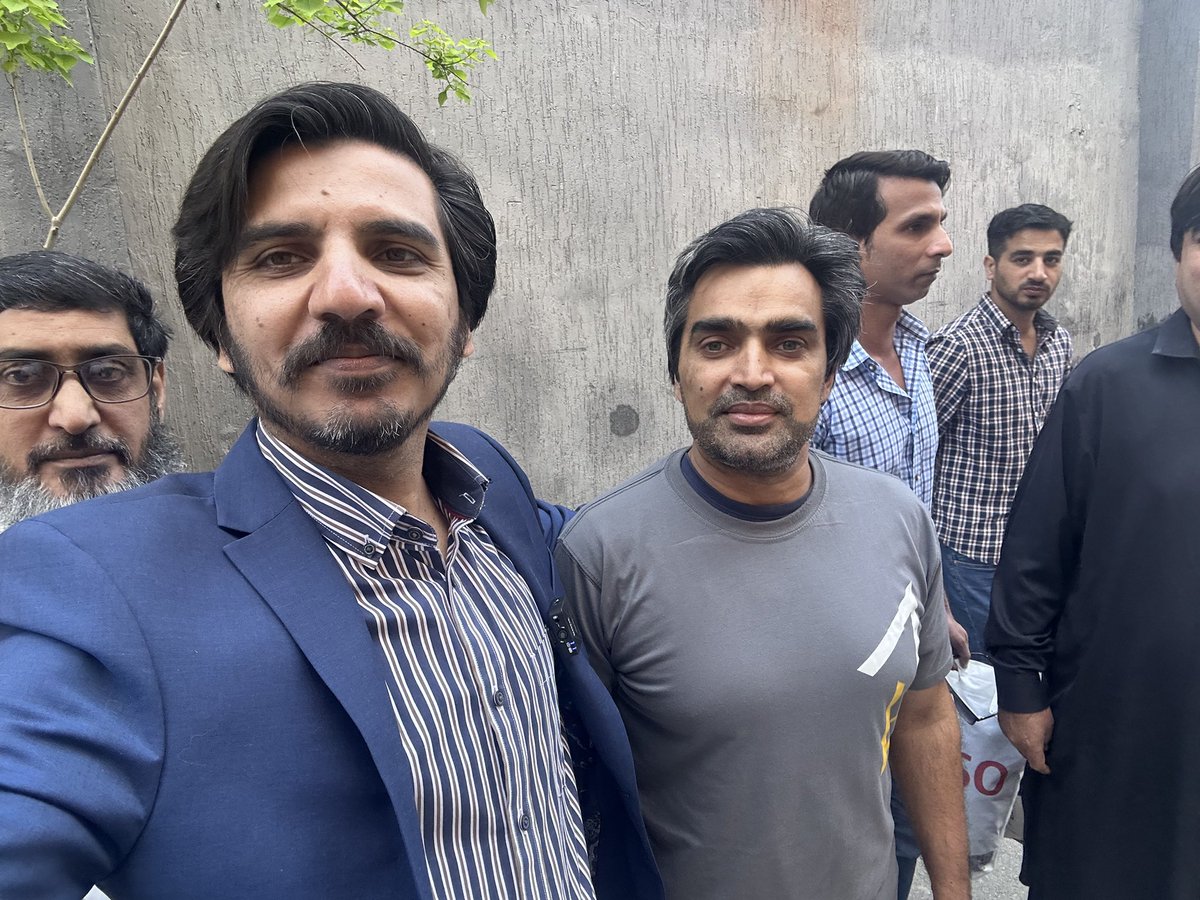
The decision was met with jubilation among Murad’s colleagues and supporters. Fellow journalist Asad Ali Toor, who interviewed Murad shortly after his release, shared images of the freed reporter surrounded by well-wishers, captioning them with relief and gratitude. Murad himself expressed thanks to his legal team, friends, and the broader journalistic community, though he refrained from detailed comments on his detention, likely mindful of the precarious environment in which he operates.
The Pakistan Federal Union of Journalists (PFUJ) and the Committee to Protect Journalists (CPJ) had earlier condemned his arrest, with the latter calling it part of a “disturbing trend” of press intimidation in Pakistan. The Human Rights Commission of Pakistan (HRCP) also voiced alarm, framing Murad’s case as a symptom of shrinking space for free expression.
Yet, Murad’s release does not resolve the underlying issues his case has exposed. Pakistan’s cybercrime laws, particularly PECA, have long been criticised for their vague wording and broad application, enabling authorities to target journalists and dissenters with impunity. His arrest follows a string of similar incidents: the detention of journalist Farhan Mallick in Karachi on 20th March and the disappearance of Asif Karim Khehtran in Balochistan on 13th March.
These cases, coupled with the unresolved abductions of Noorani’s brothers, paint a grim picture of a state increasingly intolerant of scrutiny. Rights groups have accused Pakistan’s military and intelligence apparatus—widely seen as wielding outsized influence over politics—of orchestrating such crackdowns, though these entities consistently deny involvement.
For now, Murad is free, but his case is far from closed. It serves as a stark reminder of the risks Pakistani journalists face in their pursuit of truth, caught between a government eager to control narratives and a public desperate for unfiltered information. As the dust settles, the focus shifts to whether this incident will galvanise further resistance from the media community or deepen the chilling effect on free speech.
For Murad and his peers, the fight for press freedom in Pakistan remains an uphill battle—one where every victory, however small, comes at a steep cost.
The PFUJ said: “We strongly condemn the unlawful arrest of media personnel, and the registration of a fake case based on baseless allegations on a media manager. PFUJ calls for Mallik’s immediate release.”
The IFJ added: “The arrest of senior journalist Farhan Mallick and the arbitrary raid of Raftar is a hugely concerning case of state harassment against a news outlet publishing in the public interest. This case has much wider and worrying ramifications for the entire media sector in Pakistan and this state instituted campaign against Mallick must stop. Journalists must be safeguarded for their right to report freely without fear of reprisal or retaliation.”
The NUJ (National Union of Journalists) has repeatedly condemned attacks on journalists and media workers in Pakistan, urging authorities to ensure their safety and uphold freedom of expression, while also highlighting the challenges faced by journalists in the region.
The Committee of the Leeds and West Yorkshire Branch of the NUJ, of which the author of this article, Neil Wilby, is a Member, sends best wishes to Waheed Murad and solidarity with our colleagues in the Pakistan Federal Union of Journalists and the International Federation of Journalists.
 Neil Wilby Media
Leave a comment