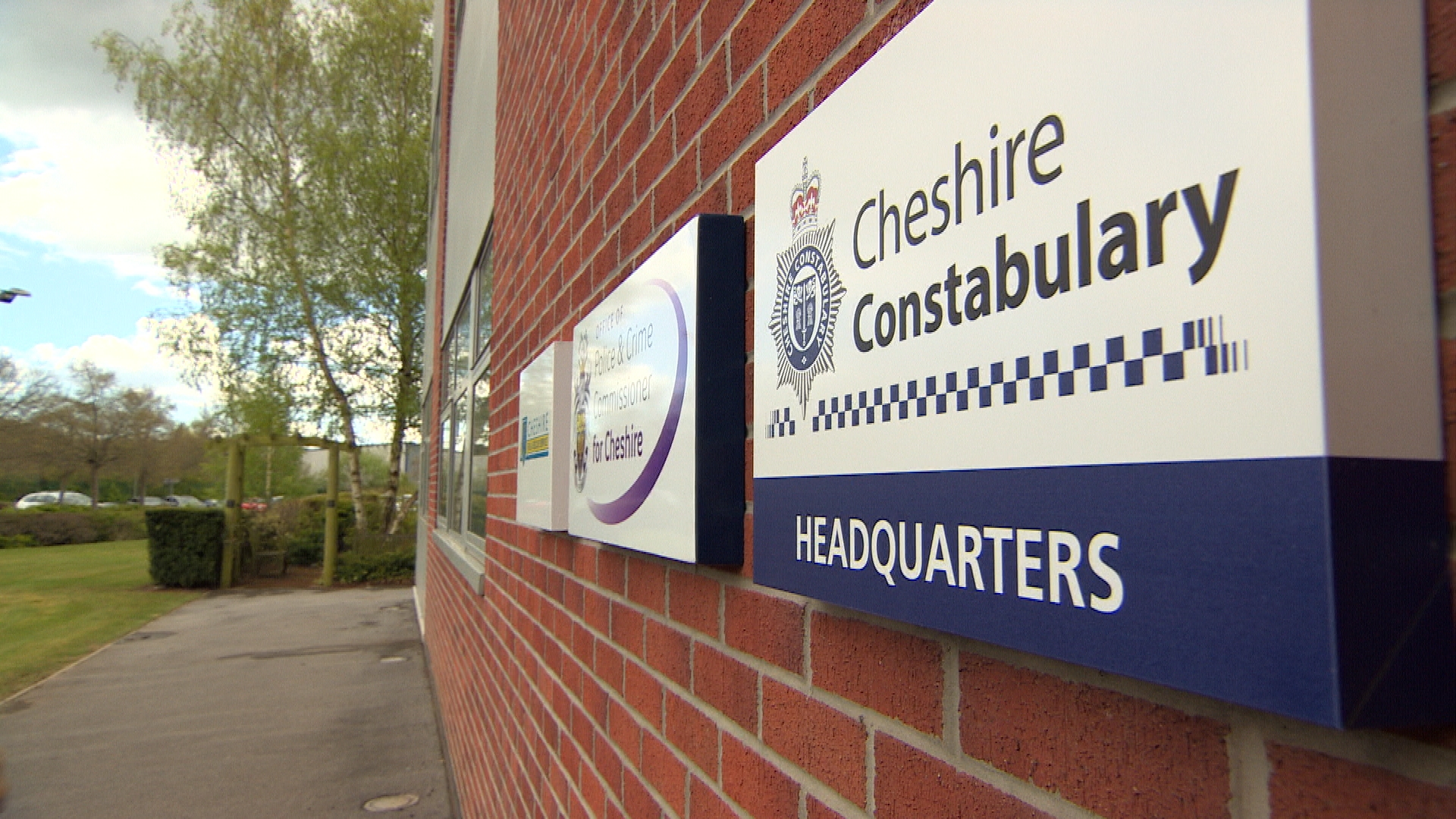
A formal legal challenge has been served on Cheshire Constabulary over its alleged mis-recording of a serious conduct complaint involving senior officers and the force’s controversial media strategy surrounding the Lucy Letby murder trials.
Earlier today (27th May 2025), a Pre-Action Protocol Letter Before Claim was served on the force’s Chief Legal Officer, David Bryan, asserting that the Professional Standards Department (PSD) had mischaracterised a complaint submitted via the Independent Office for Police Conduct (IOPC) on 13th May.
The IOPC is named as an Interested Party to the contemplated proceedings.
The complaint, now registered under Cheshire’s reference CO/00632/25, concerns allegations of reputational damage limitation, systemic evasiveness, and alleged cover-up by senior officers. It also names one junior officer directly. Albeit, she is considered to be messenger rather than the decision maker.
The judicial review challenge contends that the summary recorded by Cheshire PSD’s Complaint Manager, Lisa Renshaw, is irrational, procedurally unfair, and frustrates the purpose of the statutory complaints regime under Schedule 3 of the Police Reform Act 2002.
“This legal action is not taken lightly,” Neil Wilby says. “But where a police force mis-records a serious conduct complaint — one it has a clear vested interest in containing — then the only efficient route left, to ensure fairness and transparency, is to put the matter before the Administrative Court.”
The original complaint arises from Cheshire Constabulary’s handling of a freedom of information request relating to a lecture on media strategy delivered at a police communicators event in March 2024. That strategy is now the subject of intense media and political scrutiny, particularly as it outlines how the force shaped public messaging before, during, and after the two criminal trials of former neonatal nurse Lucy Letby.
Miss Letby was convicted, across those two trials in August 2023 and July 2024, of murdering seven babies and attempting to murder seven more at the Countess of Chester Hospital. Public, political and professional confidence in those convictions is now waning amidst an intensifying innocence campaign, to which Cheshire Constabulary has responded with an increasingly insular and guarded approach to both press and public enquiries.
A Neil Wilby Media, article published on 15th May 2025 (read more here), reported thus:
“Cheshire Constabulary do not fare at all well under that spotlight: Controlling its largely self-praising messaging through favoured journalists — and shutting out those reporters with more penetrating, public interest enquiries.”
The IOPC, as is routine in many such cases, passed the complaint back to Cheshire’s PSD for investigation. However, the force’s complaint acknowledgment summarised the matter as merely a refusal to supply information or respond to a journalist — a characterisation described in the JR Letter before Claim as “irrational, perverse, and not a decision any reasonable complaints manager could draw.”
Since lodging the original complaint, Neil Wilby has also uncovered what he describes as “further and systematic breaches” of the Freedom of Information Act (FOIA), linked to the Authorised Professional Practice (APP) issued by the College of Policing.
The APP, embedded in the Code of Ethics, via the Police Reform and Social Responsibility Act 2011, mandates that police forces deal with FOIA requests lawfully, promptly, and helpfully. It also requires clear reasoning when exemptions are used, and obliges police personnel to undergo appropriate training.
“Since its submission on 8th May, Cheshire has simply ignored an internal review request on the Letby media strategy FOIA. They’ve refused to cite lawful exemptions, omitted a unique reference number, and failed to comply with Cabinet Office guidelines, as well as APP, and then mis-recorded the complaint to downplay its significance. It’s as if the legal framework simply doesn’t apply to them.”
The JR LBC argues that these procedural failures are not isolated but evidence a pattern of institutional opacity.
The pre-action letter identifies four key legal grounds:
-
Irrationality under the Wednesbury reasonableness principle;
-
Procedural impropriety contrary to the statutory scheme for handling complaints;
-
Fettering of statutory duty by trivialising a serious complaint;
-
Misrepresentation of material facts through selective recording.
The remedies sought include immediate amendment of the complaint summary, written acknowledgment of the error, reassignment of the case to an impartial officer, and costs incurred in preparing the legal challenge.
If Cheshire Constabulary fails to respond adequately by 10th June 2025, the intention is to file judicial review proceedings at the Administrative Court in Manchester.
The complaint, and necessity for subsequent legal action, strike at the heart of the public’s right to know how police forces operate under scrutiny:
“Policing by consent relies on honesty, transparency, and accountability. If a force cannot even lawfully handle a legitimate complaint about its own messaging, then serious questions must be asked about what it is trying to hide.”
Neil Wilby is a journalist, court reporter and transparency campaigner who has reported on police misconduct, regulatory failures, and criminal and civil justice since 2009. He is the founder and editor of Neil Wilby Media, launched in 2015.
Page last updated: Tuesday 27th May, 2025 at 11h30
Corrections: Please let me know if there is a mistake in this article. I will endeavour to correct it as soon as possible.
Right of reply: If you are mentioned in this article and disagree with it, please let me have your comments. Provided your response is not defamatory, it will be added to the article.
Photo Credits: Cheshire Constabulary
© Neil Wilby 2015–2025. Unauthorised use, or reproduction, of the material contained in this article, without permission from the author, is strictly prohibited. Extracts from, and links to, the article (or blog) may be used, provided that credit is given to Neil Wilby, with appropriate and specific direction to the original content.
 Neil Wilby Media
Leave a comment