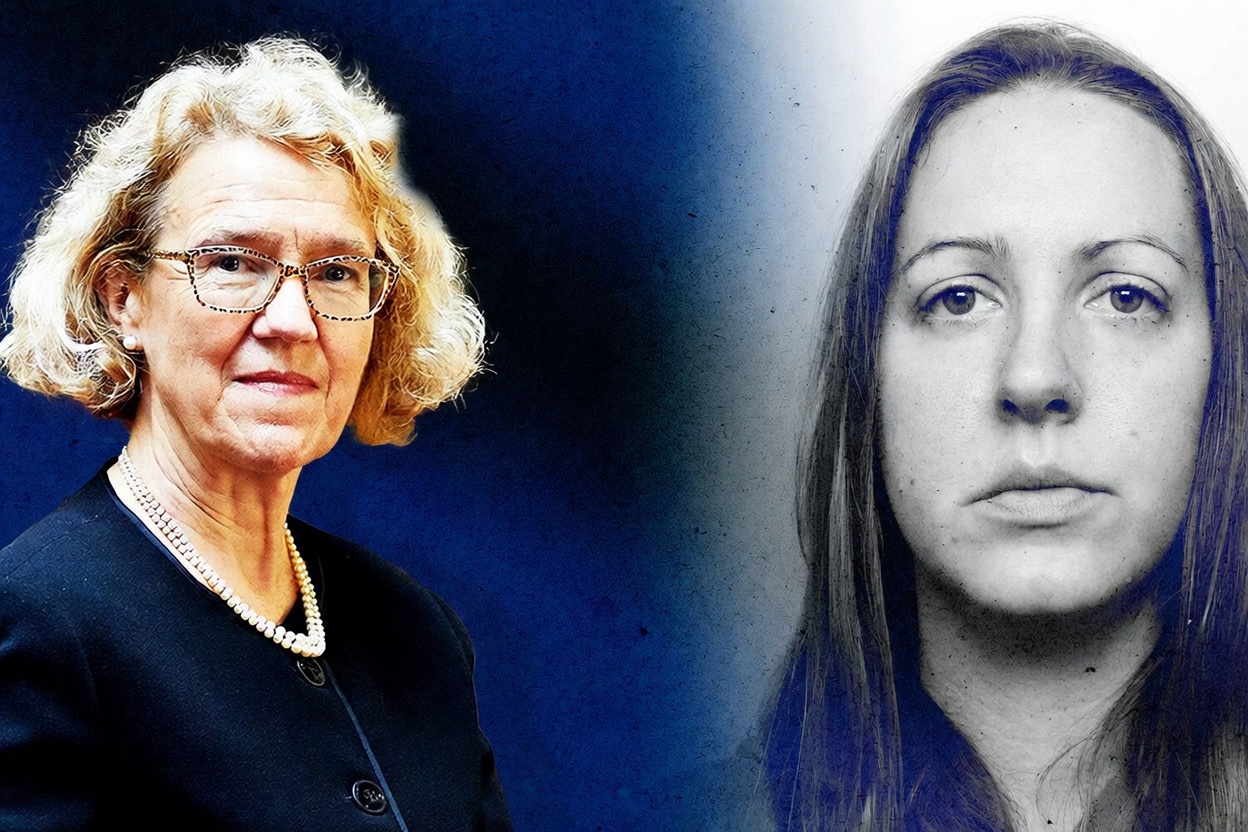
The forthcoming report of the Thirlwall Inquiry will, undoubtedly, be set against an already contested landscape, in which questions about media handling, investigative narrative, and institutional framing have moved sharply into focus — not least following widespread media coverage of a Parliamentary adjournment debate by David Davis MP on 26th March 2026 (read Hansard here).
As examined in recent Neil Wilby Media reporting on documented refusals by Cheshire Constabulary restricting disclosure across a number of enquiries relating to Operation Hummingbird and its communications strategy before, during, and after the two Lucy Letby trials, the boundaries between evidential fact, public messaging, and reputation management have become increasingly blurred.
It is within that context — rather than in isolation — that the likely impact of the Inquiry’s final report should be assessed.
That report is unlikely, given its strictly framed Terms of Reference, to have a positive impact on the Letby miscarriage of justice campaign and may, ultimately, have a neutral-to-negative effect overall.
The Inquiry’s press update of 27th February 2026 described drafting as “very well advanced”. Publication was expected to follow the 2026 Easter holiday period with a further timetable update expected in the near future.
No final report has yet been released, and there has been no indication of any material change to the Inquiry’s scope since the evidential phase concluded in January 2025. The hearing of closing submissions from counsel representing Interested Parties, which marked the formal end of the oral evidence phase, took place on 17th, 18th, and 19th March 2025.
In response to a Neil Wilby Media enquiry on 8th April 2026, the Inquiry’s press office indicated that a further update on publication timing is expected later this month (April 2026), but did not provide a revised publication date.
The inquiry’s Terms of Reference (ToRs), together with a series of procedural rulings by Lady Justice Thirlwall — including the refusal of an application by Lucy Letby’s legal team for Interested Party status — frame the exercise around how Letby was able to commit the offences of which she has been convicted, and what systemic or governance failures permitted that to occur.
Within that framework:
No remit to re-examine causation:
The ToRs (in particular Area B) focus on whether clinical staff and hospital systems failed to protect babies from Letby’s actions, rather than whether those actions caused the harm, or whether deaths and collapses might admit of alternative explanations (for example, natural causes or deficiencies in care). The annexed questions proceed on the basis of established culpability.
Chair’s stated position:
From the opening of proceedings in September 2024, and in subsequent rulings (including those delivered in March 2025), Lady Justice Thirlwall has made clear, in substance, that the inquiry will not entertain questions of guilt or innocence, re-try the criminal evidence, or function as a collateral challenge to the convictions. Applications to pause, or widen, the inquiry to consider fresh expert evidence on causation were refused.
Limits on findings:
The Inquiry is not constituted to revisit or contradict the jury’s verdicts. Any discussion of neonatal care, post-mortem evidence, or clinical decision-making is therefore likely to be assessed within the established framework of intentional harm.
The report, therefore, is expected to concentrate on:
- The experiences of parents and families
- Hospital culture, clinical governance, and management responses
- Missed opportunities to escalate concerns or suspend Letby earlier
- Wider NHS lessons concerning oversight, regulation, and accountability
It is not expected to advance findings that the children died in a materially different way from that presented at trial—matters which lie at the heart of the application made to the Criminal Cases Review Commission (CCRC) by Letby’s legal team.
On the central issue of culpability, the report is unlikely to assist: Its conclusions are expected to reinforce the prevailing institutional account: That Letby committed the offences and that the principal failure lay in the inability of systems and individuals to intervene sooner. In that context, publication may be cited by prosecutors, commentators, or others as further institutional reinforcement of the convictions, potentially complicating efforts to sustain a competing narrative.
Indirect evidential value is almost certain to arise from the Inquiry record itself and a distinction must be drawn between the report’s conclusions and the underlying material disclosed during the inquiry. Witness statements, internal hospital documents, and hearing transcripts—many already published—contain material which may, in a number instances already, be regarded as probative by those advancing alternative interpretations of events. Such material could, in principle, form part of submissions to the CCRC.
However, the report itself will not validate or endorse alternative causation theories; its analytical framework pre-set to travel in the opposite direction.
The CCRC review process is proceeding independently and is not constrained by the inquiry’s Terms of Reference. The timing of the report — now expected during the Summer months — means it is unlikely to have a direct or immediate bearing on the Commission’s decision-making timetable.
In its most recent update on the Letby review, delivered by Interim Chair, Vera Baird, on 13th February 2026, the CCRC indicated that the application, led by appeal lawyer Mark McDonald, was not yet in a completed form. Since then, following publication of a Neil Wilby Media article pointing out serious conflict of interest, the CCRC’s Head of Investigations was removed from the team assessing the Lucy Letby submissions.
Whilst the Thirlwall Inquiry has generated a substantial body of documentary and witness evidence, some of which may be of evidential interest in other settings, particularly the CCRC assessment, its final report is structurally confined in a way that makes it unlikely to deliver findings capable of advancing the miscarriage of justice case on culpability.
The legally operative route for that question remains via the criminal justice watchdog, rather than the Inquiry’s conclusions.
A process that is likely to take years rather than months.
________________________________________________________________________________________________
Neil Wilby is a journalist, court reporter and transparency campaigner who has reported on police misconduct, regulatory failures, and criminal and civil justice since 2009. He is the founder and editor of Neil Wilby Media, launched in 2015.
Page last updated: Thursday 9th April 2026 at 07h55
Corrections: Please let me know if there is a mistake in this article. I will endeavour to correct it as soon as possible.
Right of reply: If you are mentioned in this article and disagree with it, please let me have your comments. Provided your response is not defamatory, it will be added to the article.
Image credits: NWM
Contact: Email us via this weblink
© Neil Wilby 2015–2026. Unauthorised use, or reproduction, of the material contained in this article, without permission from the author, is strictly prohibited. Extracts from, and links to the article may be used, provided that credit is given to Neil Wilby, with appropriate and specific direction to the original content.
 Neil Wilby Media
Leave a comment