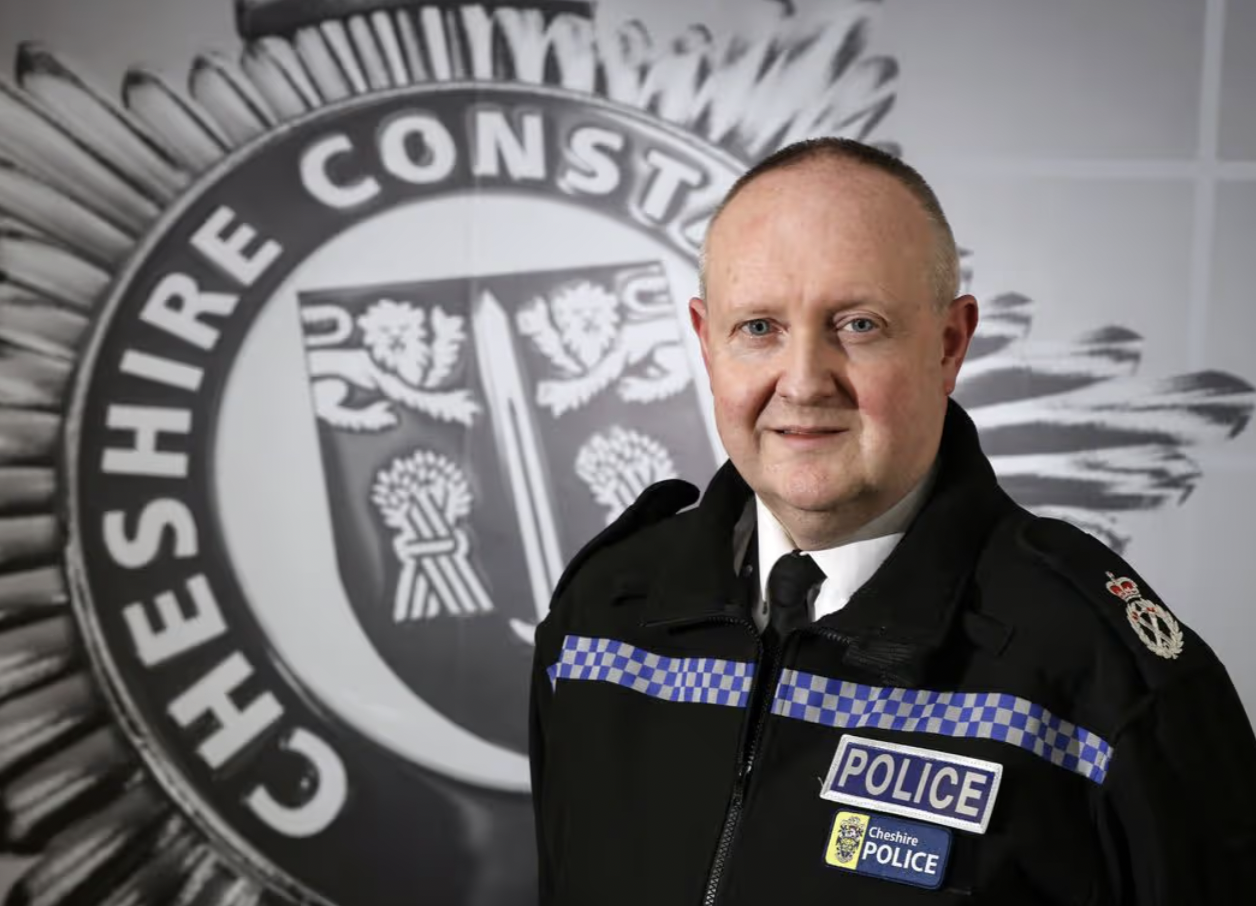
Cheshire Constabulary’s forceful rebuttal of Sir David Davis MP’s parliamentary critique of the Lucy Letby investigation did not enter the public domain through a formal press release, nor via publication on the force’s website.
Instead, the letter — dated 8th April 2026 — was reported in full by the Daily Mail, which stated that it had been “seen” by its Northern Correspondent, Liz Hull. The recipient of a number of other Cheshire police ‘exclusives’ over the past several years.
That method of publication raises a legitimate and important question: Was this an example of transparent public communication, or a more controlled disclosure of material through a single media channel?
In a case already characterised by strongly competing narratives, institutional sensitivity and growing public unease, how information reaches the public domain is not a peripheral issue. It is central.
A private letter with public consequences
The letter itself is not a minor piece of correspondence. It represents an unusually direct intervention by a serving Chief Constable into a live political and legal controversy.
Addressed to Mr Davis, Cheshire MPs, the Police and Crime Commissioner, and the Speaker of the House of Commons, it amounts to a formal challenge to remarks made under Parliamentary privilege — pointedly alleging serious failings in one of the longest and most significant criminal investigations in modern British history.
Yet despite its obvious public interest, the letter was not simultaneously released into the public domain by Cheshire Constabulary.
There was no published statement on the force’s website. No general press release appears to have been issued. No indication that the document was proactively shared across multiple media organisations.
Instead, it surfaced via a single national newspaper, framed by its reporter in language closely reflecting the force’s own emphases and conclusions. Also, closely reflecting language and framing already circulated across sections of social media commentary supportive of the police and prosecution case.
There is no direct evidence, on the public record, as to how the Daily Mail obtained the letter. However, the combination of selective publication, absence of broader release, and close alignment between the letter’s wording and the newspaper’s reporting raises a reasonable inference: that this was not merely disclosure, but communication — potentially controlled, and certainly selective.
The Commons intervention that prompted it
To understand both the tone and timing of the Chief Constable’s response, it is necessary to return to the House of Commons on 26th March 2026.
During an adjournment debate, David Davis MP delivered a detailed and highly critical analysis of the police investigation into Lucy Letby, drawing on the views of two experienced former senior police officers — Dr Steve Watts and Stuart Clifton.
His speech was not rhetorical flourish. It was structured, evidential, and rooted in professional critique. Among the key allegations were that Cheshire Constabulary:
- failed to pursue all reasonable lines of inquiry, as required under the Criminal Procedure and Investigations Act 1996
- did not follow National Crime Agency advice to establish a multidisciplinary expert panel
- relied disproportionately on a single expert witness
- failed to refer the case to the CPS Serious Crime and Counter-Terrorism Division, despite its scale and complexity
- did not properly engage with evidence of systemic failings at the Countess of Chester Hospital
Davis went further, invoking the case of Sally Clark — a miscarriage of justice in which flawed statistical reasoning played a decisive role — and suggesting that lessons from that case may not have been fully applied. That was another Cheshire Constabulary investigation ultimately and officially undermined.
The debate was conducted under a Deputy Speaker’s waiver, acknowledging the sensitivity of ongoing inquests.
In short, this was not routine Parliamentary commentary. It was a sustained challenge to the integrity of a major criminal investigation.
An unprecedented tone of rebuttal
The response from Cheshire Constabulary is striking, both in tone and substance.
Chief Constable Mark Roberts accuses Davis of making statements that are:
- “materially inaccurate”
- “misleading to Parliament”
- unsupported by “basic fact checking”
He goes further, urging the MP to raise a formal point of order to “correct the record without delay,” and warning that such commentary risks “undermining the criminal justice system.”
It is rare — arguably unprecedented — for a serving Chief Constable to address a senior Parliamentarian in such terms, particularly in relation to statements made in the Commons.
The letter is, in effect, a direct institutional defence, likely drafted in collaboration with the National Police Chiefs Council and College Of Policing — not only of the investigation, but of the processes and conclusions that led to conviction.
Where the response is strongest
On close reading, the letter is at its most persuasive where it addresses specific claims that have gained traction in public discourse.
The role of statistics
One of the MP’s central themes was the suggestion that the prosecution case relied — implicitly or explicitly — on statistical reasoning, drawing parallels with the Sally Clark case.
The role of statistics
One of the MP’s central themes was the suggestion that the prosecution case relied — implicitly or explicitly — on statistical reasoning, drawing parallels with the case of Sally Clark.
Chief Constable Mark Roberts rejects that proposition in clear terms.
He states that:
- no statistical evidence was relied upon in the prosecution case
- no expert statistical report, including from Professor Jane Hutton, was obtained
- the decision not to pursue statistical analysis was consistent with National Crime Agency advice
Instead, he asserts that conclusions of deliberate harm were reached by medical experts before any analysis of staff shift patterns was undertaken.
On the available public record, this is a clear and direct rebuttal—though its strength depends in part on how one interprets the distinction between formal statistical evidence and investigative pattern analysis.
A further layer of nuance arises from comments attributed to the Senior Investigating Officer, Paul Hughes, who has previously referred to analytical work undertaken by the investigation team in examining patterns across incidents.
While Cheshire Constabulary’s position is that no formal statistical evidence formed part of the prosecution case, such references suggest that some form of internal analysis—potentially involving the identification and interpretation of recurring patterns—did take place during the investigative phase.
That distinction is not merely semantic. It goes to the heart of an ongoing debate: whether the case can properly be characterised as entirely non-statistical, or whether elements of probabilistic or pattern-based reasoning were, in practice, engaged, even if not presented as formal expert evidence at trial.
In that context, the Chief Constable’s rebuttal is best understood not as a definitive resolution of the issue, but as a precise delineation of the form in which evidence was presented to the court.
The use of expert witnesses
The letter also confronts the claim that the investigation relied on a single expert, describing that assertion as “demonstrably untrue.”
Roberts outlines a multi-disciplinary approach, involving specialists in:
- neonatal nursing
- paediatric radiology
- pathology
- haematology
- neurology
- endocrinology
alongside two principal consultant paediatricians.
These experts, he states, were:
- independently instructed
- vetted by the National Crime Agency
- subjected to extensive cross-examination at trial
This account aligns with the structure of the prosecution case as presented in court and provides a clear counter to the “single expert” narrative.
Scope and investigative process
The letter also emphasises the scale and duration of Operation Hummingbird:
- a six-year investigation
- approximately 250 witnesses
- a “sterile corridor” approach to maintain evidential separation between cases
- a 13-month period before Letby was identified as a suspect (the investigation opened in May 2017 and Lucy was first arrested in July 2018).
These points are deployed to counter the suggestion of investigative bias or early fixation. But leaves open the question as to why the two key complainants whose actions, and meetings with police, led to Operation Hummingbird being launched. Drs Stephen Brearey and Ravi Jayaram were, it seems from all available documents, treated as witnesses and not suspects.
Selective silence: what is not addressed
However, the perceived strength of the letter depends as much on what it omits as on what it includes:
A substantial portion of Davis’s parliamentary critique is not addressed at all.
There is no engagement with:
- the Royal College of Paediatrics and Child Health report, which identified systemic failings at the hospital, but no criminal activity
- the allegation that National Crime Agency advice to establish a multi-disciplinary expert panel was not followed
- the detailed critiques of Dr Watts and Stuart Clifton regarding investigative strategy and expert selection
- the decision not to refer the case to the CPS Serious Crime and Counter-Terrorism Division
- the role and conduct of Drs Brearey and Jayaram who initially raised concerns about Letby
These are not marginal issues: They form the core of the procedural critique advanced in Parliament.
The absence of any response to them creates a clear asymmetry: the letter is detailed and confident where it addresses headline claims, but silent on the more complex and potentially consequential allegations.
Assertion without disclosure
Another defining feature of the letter is its reliance on institutional assurance.
Phrases such as:
- “no stone was left unturned”
- “exhaustive lengths”
- “confidence in the integrity”
are used to reinforce the police position.
Yet these assertions are not accompanied by the release of underlying material—policy books, decision logs, expert instructions, or internal reviews—that might allow independent verification.
This contrasts with the approach taken by Davis, who grounded his critique in named sources, documentary references, and professional opinion.
In that sense, the letter reads less as a comprehensive evidential rebuttal and more as a focused defence of selected aspects of the investigation.
Controlled disclosure and narrative framing
It is against this backdrop that the method of publication assumes particular significance.
By entering the public domain through a single outlet, rather than through open release, the force’s response was effectively mediated through a specific editorial lens.
The Daily Mail’s reporting closely tracks the language and structure of the letter, prominently advancing the Chief Constable’s assertion that David Davis MP had misled Parliament.
Whether by design or coincidence, the effect is to present the force’s rebuttal in a manner that reinforces its strongest arguments, without immediate parallel scrutiny from other outlets or independent framing.
In a case already marked by contested narratives, this approach risks creating the impression not simply of defence, but of narrative management.
Public confidence and institutional risk
The implications extend beyond media strategy.
In his Commons speech, Davis warned against the erosion of safeguards designed to prevent miscarriages of justice, and criticised what he characterised as a lack of transparency in the handling of the case.
By responding selectively — and by allowing that response to be communicated through a controlled publication route — Cheshire Constabulary may have unintentionally reinforced aspects of that critique.
Public confidence in the criminal justice system does not rest solely on outcomes. It rests on process, transparency, and the willingness of institutions to subject themselves to scrutiny.
Where questions are answered partially, and information is disseminated selectively, that confidence can be strained, even where the underlying investigation is robust.
A developing conflict
What has now emerged is a clear and escalating conflict between a senior and widely respected Parliamentarian and a police force over the integrity of a major criminal investigation.
On one level, Cheshire Constabulary’s position is coherent and, in key respects, well supported. Its rebuttal of claims relating to statistical evidence and the use of expert witnesses will appear detailed and credible to a wider public. Though that assessment is not universally shared, particularly amongst statisticians, clinicians, lawyers and other specialist commentators who have publicly questioned numerous aspects of the case.
On another level, however, the broader procedural questions raised in Parliament remain unanswered in public.
The decision — whether deliberate or incidental — to allow the force’s response to emerge through a single media outlet adds a further dimension to that conflict. Against a backdrop of repeated exclusive reporting by the same journalist, Liz Hull, on matters relating to the investigation.
What comes next
The trajectory from here is likely to involve:
- further Parliamentary engagement by Davis
- continued scrutiny by the Criminal Cases Review Commission
- potential future disclosure of investigative material, whether through legal process or independent review
For now, Cheshire Constabulary has set out a clear position on selected issues. But, by not addressing others — and by controlling, or appearing to control, the manner of its communication — it has ensured that the wider debate will not only continue but intensify.
In a case of this magnitude, how the story is told may prove almost as significant as the facts themselves.
Neil Wilby is a journalist, court reporter and transparency campaigner who has reported on police misconduct, regulatory failures, and criminal and civil justice since 2009. He is the founder and editor of Neil Wilby Media, launched in 2015.
Page last updated: Monday 13th April 2026 at 08h45
Corrections: Please let me know if there is a mistake in this article. I will endeavour to correct it as soon as possible.
Right of reply: If you are mentioned in this article and disagree with it, please let me have your comments. Provided your response is not defamatory, it will be added to the article.
Image credits: MEN
Contact us: Email via this weblink.
© Neil Wilby 2015–2026. Unauthorised use, or reproduction, of the material contained in this article, without permission from the author, is strictly prohibited. Extracts from, and links to the article may be used, provided that credit is given to Neil Wilby, with appropriate and specific direction to the original content.
 Neil Wilby Media
Leave a comment