As a police force, Charlene Downes investigation represents one of darker periods in their history
Karen Downes, the mother of a 14-year-old girl believed to have been murdered more than 20 years ago made a public call last week for a planned set of localised inquiries into grooming gangs to include her home town of Blackpool. Lancashire Constabulary (Lancs) has previously stated that Charlene Downes, who was last seen at…
Karen Downes, the mother of a 14-year-old girl believed to have been murdered more than 20 years ago made a public call last week for a planned set of localised inquiries into grooming gangs to include her home town of Blackpool.
Lancashire Constabulary (Lancs) has previously stated that Charlene Downes, who was last seen at a late hour on 1st November 2003, was one of a number of under-age girls who were sexually exploited in the once popular, but now decidedly seedy, coastal resort.
The teenager’s mother told the BBC that she was “living in limbo” and wanted justice for her daughter, who has never been seen since that fateful evening.
It is not clear how Mrs Downes connects the two: Child exploitation, sexual and otherwise, has long been a substantial issue for the police and its partner agencies, in and around Blackpool, but there is little evidence available, publicly at least, regarding the existence of Asian grooming gangs.
As a police force, the Downes case represents one of the darker periods in Lancs’ history. A seriously concerning aspect for the author of this article, Neil Wilby, who has had a close quarters view of the force over the past two years, is that a number of the failings present in Charlene’s case remain extant right up to the present day: Laziness, ineptitude, clumsy evidence handling and poor decision-making. More concerningly, an apparently reflex resort to lying (or covering up) across almost every department in Lancashire Constabulary:
Whichever way that falls, the disappearance of Charlene Downes has become a haunting emblem of child vulnerability and systemic failure of police and partner agencies. A well-known fellow journalist, Neil Morrow, who has worked on at least one TV documentary about this troubling case, told Neil Wilby Media: “This is one investigation that Lancs would definitely rather forget about”.
Two decades later, her case remains unsolved, with no convictions, and, as cited in the opening paragraph of this article, her mother is advocating for the town where she still lives to be included in the Home Secretary’s recently announced clutch of inquiries into grooming gangs.
This article explores the tragic journey from Charlene’s troubled home background to the present-day call for justice, weaving through a web of exploitation, criminal trials, misconduct hearings, legal battles, a successful appeal and substantial societal controversy, with a particular focus on the failings of the Lancs investigation and their role in the collapse of the second trial. This sits alongside the controversy surrounding Detective Sergeant Jan Beasant‘s appeal of her misconduct outcome and her former colleagues’ claims of scapegoating and cover-up.
Background: A Troubled Home and Vulnerable Teen
Charlene Downes lived in Buchanan Street, Blackpool, an economically and sociologically deprived area, close to the town’s main railway station, with her parents, Karen and Robert Downes, a former soldier, and her siblings. The family moved to Blackpool from the West Midlands in 1999.
She attended St George’s School in Blackpool, but was expelled (for reason(s) that neither the school nor local authorities publicly disclosed), leading her to frequent the Promenade in the Central Pier area, less than ten minutes walk from her home.
Research suggests she was one of 60 girls, some as young as 11, groomed by men, often from fast-food outlets, for sex in exchange for food and cigarettes following her exclusion from school (read more here).
Allegations paint a disturbing picture of her home life. Reports indicate her father associated with convicted pedophiles, inviting them into the family home, including Ray Munro, charged with sexual offences against children, on the day she disappeared (read more here)
A Reddit discussion claimed that Charlene’s father was physically abusive, though this lacks official confirmation (read more here). Notwithstanding, Karen Downes waited two days to report Charlene missing, and police later decided that the teenager wouldn’t be allowed to return home, if found, opting for a Child Protection Order (read more here).
This, obviously, suggests a chaotic, potentially neglectful environment, contributing to a young teenager’s vulnerability and troubled state of mind. By way of balance, during later court proceedings she was described as “well and happy’. Readers can take their pick.
Disappearance and Initial Police Investigation
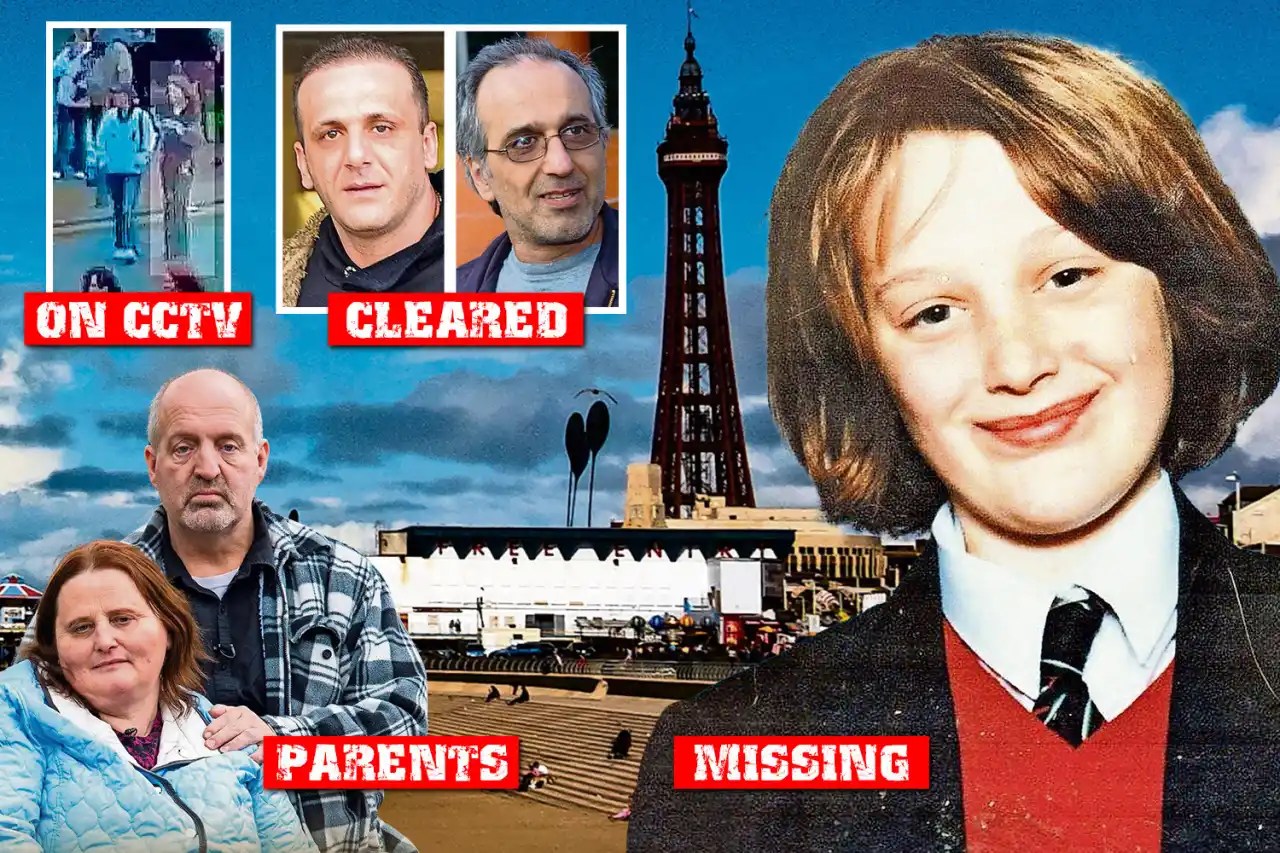
On that fateful November evening in 2003, Charlene was last seen at 9pm on Dickson Road and Talbot Road in central Blackpool, with CCTV footage showing her with an unidentified woman (read more here). Her friend last saw her around 11pm near the Talbot Road/Abingdon Street junction close to the earlier sighting. Both these locations are around five minutes walk from Buchanan Street and would have been particularly busy on a Saturday night during the Blackpool Illuminations ‘season’.
As mentioned above, Karen Downes reported her daughter missing two days later, and initially, and probably with good cause, it was treated as a missing person case. Lancs later upgraded it to a murder investigation, though the exact timing isn’t readily available in publicly accessible records.
The Murder Inquiry: Trials, Collapse and Police Failings
In 2007, after a ‘supergrass’ named two men allegedly involved in Charlene’s disappearance, the suspects were secretly bugged. Iyad Albattikhi, 29, from Jordan, and Mohammed Reveshi, his business partner at Funny Boyz fast-food outlet, were tried for her murder and disposal of her body, respectively, at Preston Crown Court.
The Crown Prosecution Service alleged Mr Albattikhi, known locally as ‘Eddie’, indecently assaulted and murdered her, and Mr Reveshi disposed of her body, with claims it was dismembered and used in kebabs, based on secret recordings (read more here). The two men denied any wrongdoing. They had spent thirty months in prison on remand.
The first trial ended with the jury failing to reach a verdict and a re-trial, in 2008, collapsed after serious doubts about evidence integrity and continuity, with the Independent Police Complaints Commission (IPCC) citing ‘catastrophic police errors’ in their 2009 report (read morehere).
The collapse of the second trial, which effectively cleared the two suspects, can be very largely attributed to the failings of the Lancashire Constabulary’s investigation. The IPCC identified a “catalogue of errors” in the handling of covert surveillance evidence, which undermined the prosecution’s case. Specifically, the police were criticised for poor management of audio and video material, inadequate transcription, and failure to ensure evidence integrity, leading to “grave doubts” about probity and reliability (read more here).
Detective Sergeant Jan Beasant was found guilty of misconduct and forced to resign in 2011 for her role in these failings, with the IPCC highlighting strategic and tactical failures in the investigation (read more here). It was reported that these errors not only compromised the criminal proceedings but also hindered the pursuit of justice for Charlene Downes.
Jan Beasant’s Misconduct Outcome and Appeal Controversy
D/Sgt Beasant was found guilty of misconduct in 2011 for her role in the investigation, particularly for spending 2,500 hours transcribing 52 audio tapes, which were criticised as “poor”, with “low” confidence in accuracy during the trial (Read more here).
She was forced to resign, but, in 2012, a Police Arbitration Tribunal overturned this finding, recommending her reinstatement (read more here). However, by 2014, she was still referred to as a “former detective” and was suing the police for up to £500,000, claiming her transcripts were accurate and that she was made a scapegoat for broader institutional failings (read more here and here). This suggests she was not reinstated, despite the tribunal’s recommendation. The most likely outcome being that Jan’s claim was compromised by the force, by way of a financial settlement and a non-disclosure agreement (NDA) It is understood that she now lives in the United States of America.
Her lawyers, in submissions to the High Court, said Lancashire Constabulary ‘knowingly or with reckless indifference’ accused her of a lack of integrity. Some might argue that a settlement of £500,000 would not have been out of order given Jan’s loss of reputation, premature ending of career and pension diminution.
An unexpected detail is that some her former Lancs colleagues claim she was scapegoated to draw attention away from what they describe as “grotesque institutional failings” within the force, adding another layer of controversy.
This perspective, mentioned in articles such as one from the Daily Mail (read more here), suggests internal tensions and raises questions about whether the force’s broader systemic issues were the true cause of the investigation’s failures, rather than individual errors.
In August 2017, Lancs arrested a 51-year-old man from Preston, who lived in Blackpool at the time of Charlene’s disappearance, on suspicion of murdering her. He was released two days later and is no longer under investigation
Disturbing Claims and Wider Exploitation
The trial brought to light what Julie Bindel described as “endemic child sexual abuse” in Blackpool, with police finding Charlene was part of a network where girls swapped sex for food and affection (read more here). Claims during the trial that her body was ground into kebabs and bones crushed into tile grout were horrific, though unproven, adding to public shock (read more here). This uncovered a broader issue, with up to 60 girls targeted, highlighting systemic failures in protecting vulnerable teens, which the police investigation failed to address adequately. Indeed, positive steps were taken to downplay and/or conceal it to protect the reputations of the seaside resort and the police force charged with keeping its residents safe.
The Aftermath: Family Trauma and Public Backlash
The Downes family has, for better or worse, undoubtedly endured immense and painful shame and embarrassment: Karen and Robert have faced ongoing abuse and trolling, with Robert being called a murderer and pedophile, and even physically attacked, including being hit by a car (read more here). Tragically, their son Robert Jr. died of a heroin overdose in 2021 at age 30, compounding their grief (read more here). Karen published a book in 2018 on sexual exploitation, hoping to prevent future cases (read more here).
Current Situation: Call for Inquiry Inclusion and Police Updates
As mentioned above, as of March 2025, Karen Downes is advocating for Blqckpool to be included in Home Secretary Yvette Cooper’s grooming gang inquiries, announced on 16th January, 2025. Cooper outlined a national audit led by Dame Louise Casey and up to five local inquiries, with Oldham confirmed and four others pending (read more here). Blackpool Council debated inclusion on 30th January 2025, but voted to welcome the Jay Report recommendations instead, suggesting it’s less likely to be selected amongst the ‘Cooper Five’ (read more here).
The Justice for Charlene Downes campaign group has been vocal, with protests during council meetings, reflecting ongoing efforts.
Another unexpected twist is that the last mention of Charlene Downes on the Lancashire Constabulary website was in 2020 (read more here), despite the force claiming the case remains a priority. This raises questions about the consistency of their efforts, especially given the high-profile nature of the case and the ongoing family trauma.
Karen Downes’ appeal for a grooming gang inquiry in Blackpool did not stir Lancs’ into making another appeal for information or finding some other way to breathe life into this most troubling of cold cases. Making the words of Neil Morrow ring even more true.
Conclusion and Ongoing Efforts
The Charlene Downes case remains a poignant reminder of the need for vigilance against child sexual exploitation. With a £100,000 reward still offered for information leading to convictions or body recovery, and Karen’s advocacy for inquiry inclusion, the quest for justice continues. The controversy around local inquiry selection underscores broader societal debates, with survivors and families urgently and vociferously seeking accountability and change.
It also serves as a stark reminder that the key institutional problems that blighted the Downes investigation are still extant in Lancashire Constabulary with more on that to follow in the next Neil Wilby Media article.
Follow Neil Wilby on Twitter (here) for signposts to any updates to this article.
Page last updated: Monday 3rd March, 2025 at 06h25
Thank you for reading and a polite request: If you feel this article is of value and in the public interest, and wish to make a contribution to the running costs of this website, it would be very much appreciated. Donations can made securely (and anonymously if required), via Buy Me A Coffee at this link or via PayPal at this link.
Corrections: Please let me know if there is a mistake in this article. I will endeavour to correct it as soon as possible.
Picture credit: Julie Bindel/News International
Right of reply: If you are mentioned in this article and disagree with it, please let me have your comments. Provided your response is not defamatory it will be added to the article.
 Neil Wilby Media
Leave a comment