Cheshire Constabulary’s recent refusal of a freedom of information request, seeking details of its communications strategy during the Lucy Letby investigation, has intensified scrutiny of police transparency in a case that continues to divide public opinion.
Issued yesterday (8th May 2025), the finalisation marked the request “vexatious” under Section 14(1) of the Freedom of Information Act, 2000 (hereafter “FOIA” or “the Act”) but its lack of reasoning and procedural irregularities—including the red-flag absence of an internal reference number—suggest a poorly disguised effort to shield the force’s actions from closer examination.
As innocence campaigners, led by prominent public figures such as David Davis MP, challenge the safety of the Letby convictions, this refusal raises urgent questions about how the police shaped the narrative of a case that has fractured public trust in the criminal justice system.
The FOIA request was submitted on 7th April 2025, to Cheshire Constabulary by the author of this article, Neil Wilby, a newsgatherer recognised by the National Police Chiefs’ Council (NPCC), seeking all data related to a presentation titled ‘The Lucy Letby Case (Operation Hummingbird)’, delivered by the force’s Communications Lead, Shelley Smith, in March 2024 at a Police Communicators Strategic Course.
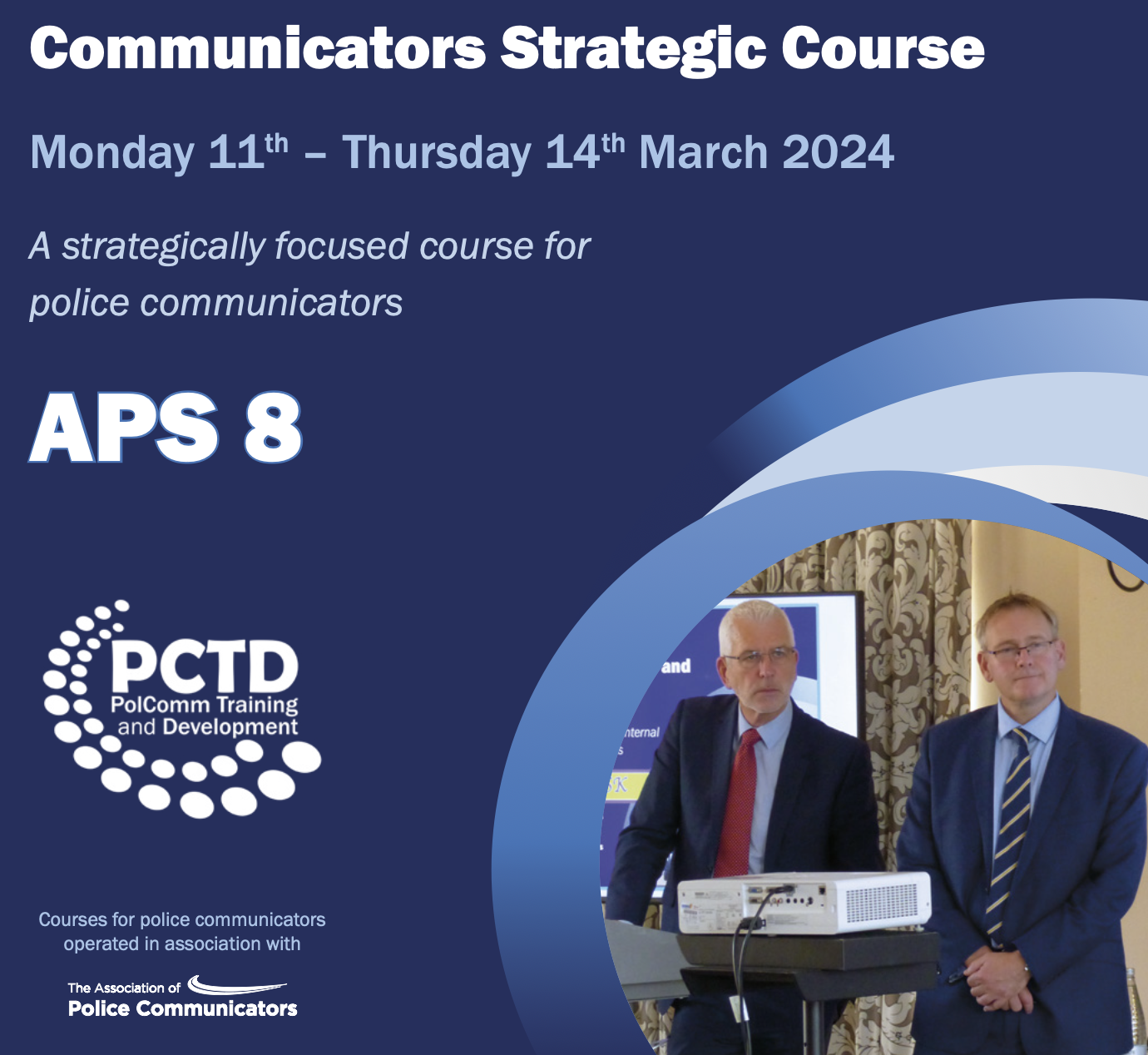
Held at the prestigious Belton Woods Hotel, Spa and Golf Resort in Lincolnshire, the four day residential course was organised by PolComm Training and Development (PCTD) and the Association of Police Communicators (APComm), attended by seventeen communications professionals from UK police forces and the media. The latter group included the BBC’s Danny Savage.
Shelley Smith’s lecture detailed Cheshire’s public messaging strategy during the Operation Hummingbird investigation (2017–2023), the initial 11-month trial (2022–2023), and a 2024 re-trial concerning Child K, which, in totality, convicted Miss Letby of murdering seven babies, and attempting to murder seven others, at the Countess of Chester Hospital.
The safety of all of those convictions is now hotly disputed. Not least by the systematic, and highly public, traducing of: Narrow investigative focus; reliability of key prosecution witnesses; flawed statistical analysis and dismantled expert medical evidence. Non-, or late, disclosure of material evidence to the defence legal team, a staple of most miscarriages of justice, is also an emerging factor.
The FOIA request was narrowly focused, drawing on the decades of experience of Neil Wilby, not just as a journalist but tenacious transparency advocate, targeting records of the presentation’s preparation, delivery, observation, wash-up, and feedback. It also included a query about whether the force consulted the NPCC’s Central Referral Unit, which coordinates responses to sensitive FOIA requests and has come under recent, and separate, Neil Wilby Media scrutiny (read more here).
The Police Communicators describe Shelley Smith’s one hour session as an exploration of the “highs, lows, twists, and turns” of managing media, stakeholders, and seven grieving families under global scrutiny, making the requested data pivotal to understanding the force’s role in shaping public perception during a case of unparalleled controversy. This is the introductory text drawn directly from the PCTD/APComm brochure:
“CASE STUDY 3:
“The Lucy Letby case (Operation Hummingbird) Shelley Smith
“A cold, calculating killer; the face of evil – that’s how international media described Lucy Letby,
modern Britain’s most prolific child serial killer.
“Last year the neo-natal nurse was convicted of the murder of seven tiny premature babies and
the attempted murder of six others at the Countess of Chester Hospital – the place she should
have been caring for them.
“Her 11-month murder trial – believed to be the longest in British criminal history – captured not
only the attention of the media but also ordinary people around the globe who were horrified at
the thought of a nurse harming vulnerable newborns.
“Operation Hummingbird, which was launched in 2017, is the highly complex and very sensitive
investigation that led to this high-profile conviction.
“Shelley Smith, Communications Lead, was embedded with the investigation team and had the
difficult task of telling this most extraordinary and emotive story against a backdrop of
investigative challenges, stakeholder scrutiny, international media attention, social media
madness and 13 grieving families.
“Go behind the scenes and delve deeper into an investigation like no other – as Shelley takes you
through the highs, lows, twists and turns and shares how the story of Cheshire Constabulary’s
seven-year investigation to secure justice for the babies and their families was told.
“The trial has closed one chapter of this heart-breaking case but, sadly, the story is far from over.”
At least, the last part of the final sentence is true. The rest has an uncomfortably self-aggrandising and hyperbolic tinge that will appear unattractive and gratuitous to so very many people in a case as seriously consequential as this one.
Questions such as, were the grieving families approached for assent to the presentation, are bound to be asked? As will, at what level of seniority within Cheshire Constabulary was this course attendance and content approved?
Cheshire Constabulary’s FOIA response, citing Section 14(1) of the Act, which permits refusal of requests deemed unreasonably burdensome or lacking purpose, was signed off by Data Protection Advisor, Emma Krzyzaniak. It provided no explanation and omitted a reference number, a standard feature of FOIA processes for tracking and accountability.
The use of junior officers as human shields by decision maker(s) is, regrettably, an unattractive, and far too frequent, occurrence in dealing with police forces down the years. This response has all the same hallmarks.
Delivered late on the 20th working day—the statutory maximum—despite an earlier 7th April acknowledgment, citing workload delays, the refusal suggests minimal engagement. These lapses—delay, missing reference number, and unexplained refusal—point to a likely pre-formed decision to block scrutiny, without any proper and necessary assessment of the merits of the request having taken place.
The Freedom of Information Act, 2000, enables public access to authority records, fostering transparency. Many other exposés on this Neil Wilby Media website have used request responses from public authorities, and policing bodies, as their foundation.
Section 10(1) requires responses to be made “promptly, and in any event not later than the twentieth working day.” The Information Commissioner’s Office (ICO) emphasises that “promptly” mandates swift action, with the 20-day limit as a backstop. Cheshire’s response, arriving in the deadline’s final hours, flouts this principle. The force’s initial acknowledgment offered no specific justification for the delay, and no interim updates or clarification requests were issued, undermining any future claim of diligent handling.
Beyond the substantive refusal, Cheshire Constabulary’s failure to issue a reference number for this FOIA request is more than just an administrative oversight—it is a breach of standard transparency protocols and a procedural red flag. FOIA requests are formally logged and tracked with unique identifiers to ensure accountability, audit trail, and procedural fairness. The absence of a reference number indicates either gross negligence, deliberate procedural irregularity, or an “off the books” finalisation—all of which warrant serious scrutiny beyond Cheshire’s internal processes.
Without a reference number, there is no clear footprint of how this request was assessed, whether legal exemptions were properly considered, or whether external influences played a role in the refusal decision. This omission raises further concerns about whether the request was informally dismissed without proper governance.
Such an approach is deeply troubling in the context of a case already engulfed by high controversy: Transparency is critical in police operations—especially when public confidence in the fairness of investigations and safety of convictions at trials is at stake. The force’s actions here, under even the lightest scrutiny, are unethical and unprofessional at a minimum; but, much more likely, designed with mischievous intent,
Cheshire Constabulary’s formal refusal under the ‘vexatious’ exemption raises serious concerns about such transparency and, equally importantly, procedural integrity. This mechanism is intended to prevent requests that impose a grossly excessive burden or are intended to disrupt operations, yet in this case, the request was precise, reasonable, and directly tied to legitimate public interest—namely, police communications around the UK’s most contentious criminal trial in recent history.
Legal precedent (Dransfield v Information Commissioner [2012] UKUT 440 (AAC)) makes clear that a vexatious request must demonstrate characteristics such as obsessive repetition, significant burden, or improper intent. The ICO further states that a public authority cannot dismiss a request simply because it is inconvenient or sensitive. Cheshire’s refusal fails to provide any reasoning; for example, any evidence of excessive burden, or any argument regarding improper motive.
Moreover, if the requested data exists—records of a single documented presentation given by a senior officer on a specific date—it is difficult to see how disclosure could constitute an undue administrative burden.
Police forces have previously been rebuked by the ICO for misusing Section 14(1) to suppress scrutiny, including cases where requests related to misconduct investigations and operational decision-making. The absence of any justification for invoking vexatiousness, paired with the force’s failure to acknowledge the request formally by issuing a reference number, again suggests the refusal was premeditated rather than the result of a fair assessment.
This raises two uncomfortable questions: Is Cheshire Constabulary’s blank refusal a calculated attempt to suppress scrutiny of how it shaped the media narrative around the Lucy Letby case and why is the force prepared to put its entire legitimacy on the line over a single, neutrally presented freedom of information request?
The ongoing, and heightening, political and press scrutiny of the Lucy Letby case makes the outcome of this FOIA request even more critical: Campaigners argue that the police’s media output, often amplified by sensationalist media, shaped perceptions before and during the trials.
The requested data could clarify whether Cheshire’s strategy was fair or driven by external pressures, particularly as oral evidence heard at the Public Inquiry, and/or written statements published on its website, have, to the trained eye, further undermined the police investigation integrity.
For the seven bereaved families, understanding how their personal tragedies was communicated is not just academic—it’s a matter of trust in institutions meant to serve them. The FOIA refusal, lacking cogent explanation, fuels perceptions of another Cheshire cover-up, especially among those questioning the convictions’ reliability. Mail on Sunday columnist, noted author and unsafe conviction standard-bearer, Peter Hitchens, met with similar obstruction when seeking information via their press office over a controversial Lucy Letby pre-trial press briefing. Presumably, with Shelley Smith at its heart. Which, one suspects, is another unfinished story.
The broader implications are chilling: If a police force can dismiss legitimate requests without justification, it undermines the Act’s very purpose (and in Peter’s case, the very point of having police press offices). The public’s right to scrutinise how authorities handle high-profile cases—particularly those involving full life sentences and grieving families—is at risk.
The Thirlwall Inquiry’s focus on systemic failures at the Countess of Chester Hospital underscores the urgency of openness. By obstructing access to its communications strategy, Cheshire risks deepening distrust in a case that has already fractured public confidence, not just in their force but in the wider police service.
The request’s query about NPCC Central Referral Unit involvement adds further intrigue. The NPCC advises forces on sensitive FOIA requests, ensuring consistency but, on occasions, raising concerns around centralised control which, of course, the Police Chiefs’ deny.
Cheshire’s silence on this point is notable. If the NPCC influenced the Section 14(1) refusal, it could suggest a broader strategy to limit disclosures about the Letby case, especially as the inquiry and campaigns intensify scrutiny. Such coordination would challenge the FOIA’s principle of impartial handling, prioritising institutional interests over public access.
An internal review, filed with Cheshire Constabulary by Neil Wilby under the Cabinet Office Code of Practice (Section 45 of the FOIA), challenges the refusal’s lawfulness and its inherent procedural flaws, requesting a response within the stipulated 20 working days. It cites the Section 10(1) delay, Section 14(1) misuse, and missing reference number.
If, after review, the exemptions under the Act are upheld, the matter will escalate to the ICO, which has scrutinised many similar FOIA violations. The ICO’s 2023 guidance on Section 14(1) requires “clear, evidence-based reasoning,” a standard Cheshire’s refusal plainly fails to meet.
The public can access the FOIA request, refusal, and internal review on the iconic WhatDoTheyKnow platform at this weblink.
The implications of this blank refusal demand further scrutiny: If Cheshire can block transparency in a case of this magnitude, what else is hidden? As the New York Times, Daily Mail, and The Telegraph, amongst others, have already shown, relentless press enquiry is vital.
This FOIA battle is a critical step, with campaigners (innocence and guilters), bereaved families, and the public set to watch intently.
“Public confidence in both policing and the wider criminal justice system is at stake,” writes Neil Wilby in the internal review. “A transparency-centred request into how your force managed public messaging during this period [before and after the Lucy Letby trials] cannot be fairly described as lacking serious purpose.”
Well illustrated in Cheshire Constabulary’s own words, so graphically illustrated here:

_________________________________________________________________________
Corrections: Please let me know if there is a mistake in this article. I will endeavour to correct it as soon as possible.
Right of reply: If you are mentioned in this article and disagree with it, please let me have your comments. Provided your response is not defamatory it will be added to the article.
Photo Credits: APComm
© Neil Wilby 2015-2025. Unauthorised use, or reproduction, of the material contained in this article, without permission from the author, is strictly prohibited. Extracts from, and links to, the article (or blog) may be used, provided that credit is given to Neil Wilby, with appropriate and specific direction to the original content.

 Neil Wilby Media
Leave a reply to Cheshire Constabulary faces police conduct complaints over Lucy Letby FOIA refusal – Neil Wilby Media Cancel reply