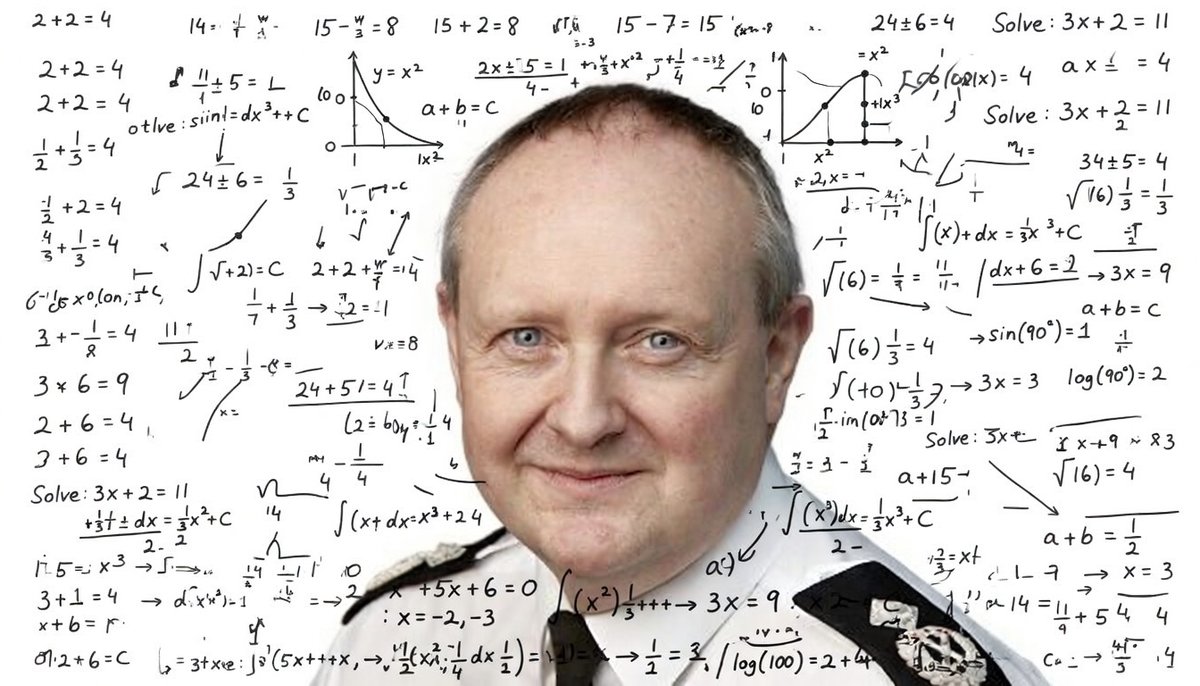
Questions are mounting over the handling of a “private” letter authored by Cheshire Constabulary’s under-siege chief constable, Mark Roberts, after it emerged that the document appears to have been shared with a single journalist, whilst being withheld from others.
This development has prompted scrutiny not only of the force’s media handling practices, already the subject of other controversies but also of whether the manner of disclosure engages broader principles of fairness, transparency, and consistency in the use of official information.
The correspondence, described by Cheshire police’s press office as ‘a private communication’, is understood to have been circulated to just one favoured media contact, the Daily Mail‘s Northern Correspondent, Liz Hull.
However, when other accredited journalists, including the Mail on Sunday‘s, Peter Hitchens, sought access to the same material, those requests were declined.
In a broader context, Ms Hull has grounded a number of other exclusives in recent times on material that also appeared to be supplied to her on a solus basis by the same police force.
This apparent inconsistency has raised a straightforward but significant question: On what basis can a document be characterised as “private” while simultaneously being disclosed, albeit selectively, into the public domain?
At the time of publication of this article, the full contents of the letter remain unclear. That, in itself, makes it difficult to assess whether any personal data is contained within it, or whether its disclosure engages the provisions of the UK General Data Protection Regulation or the Data Protection Act 2018.
Nevertheless, the manner of its release — to one recipient but not others — has become the focal point of concern.
The College of Policing’s Authorised Professional Practice (APP) dealing with Media and Communications emphasises that engagement with journalists should be conducted in a manner that is fair, open, and transparent (read APP at this weblink).
Read alongside the statutory Code of Ethics — issued under the Anti Social Behaviour, Crime and Policing Act 2014 — these standards underline the expectation that police forces will deal with accredited media consistently and professionally, particularly where information is being shared beyond internal use.
While APP guidance does not carry the force of statute in itself, chief officers are required to have regard to the Code of Ethics, which in turn informs how such principles should be applied in practice.
Against that backdrop, selective disclosure of material to a single journalist — absent any clear operational justification — risks giving rise to questions not only about transparency, but also about the perception of preferential access.
Although it remains uncertain whether the letter contains personal data, the scenario potentially engages the core principles set out in Article 5(1)(a) of the UK GDPR, namely that personal data should be processed lawfully, fairly, and in a transparent manner.
If personal data is present, any disclosure would require a lawful basis. Equally, questions may arise as to whether that basis — if relied upon — has been applied consistently across comparable requests for access.
More broadly, even in the absence of personal data, the selective sharing of official correspondence with a limited subset of the media may raise governance issues capable of intersecting with data protection principles, particularly where fairness and transparency are in issue.
In an effort to clarify the applicable regulatory framework, Neil Wilby Media approached the Information Commissioner’s Office for comment ahead of publication.
The ICO press office responded promptly to the enquiry but declined to comment on the specific circumstances, stating that it is unable to do so via its press function. It instead directed this publication to general guidance on data sharing by competent authorities (read here) and advised that concerns of this nature may be pursued through the formal complaints process.
While the response does not engage directly with the facts of this case, it does confirm that the regulator views such matters through the lens of data sharing and, where appropriate, formal regulatory scrutiny.
For Cheshire Constabulary, the primary issue will, inevitably, be the hotly disputed content of the letter itself. However, the manner in which it was distributed raises a separate, and not insignificant, question about process and consistency – and these key questions remain:
- Why was the letter disclosed to one journalist but not others?
- On what basis was it considered appropriate for selective release?
- What internal governance or authorisation process, if any, underpinned that decision?
Absent clear answers, the episode risks reinforcing a perception — long contested by policing bodies — that access to information may, at times, depend more on relationships than on consistent application of policy.
The controversy arrives at a time of heightened sensitivity around police communications, media briefings, and the management of information in high-profile cases (read more at this weblink).
Against that backdrop, even relatively contained incidents can assume wider significance, particularly where they touch upon public confidence in the fairness and integrity of official processes.
Whether this episode ultimately gives rise to regulatory scrutiny remains to be seen. For now, it stands as a case study in the fine balance between confidentiality, transparency, and the equitable treatment of the press.
________________________________________________________________________________________________
Neil Wilby is a journalist, court reporter and transparency campaigner who has reported on police misconduct, regulatory failures, and criminal and civil justice since 2009. He is the founder and editor of Neil Wilby Media, launched in 2015.
Page last updated: Tuesday 14th April 2026 at 17h55
Corrections: Please let me know if there is a mistake in this article. I will endeavour to correct it as soon as possible.
Right of reply: If you are mentioned in this article and disagree with it, please let me have your comments. Provided your response is not defamatory, it will be added to the article.
Image credits: Mark Mayes
Contact: Email us via this weblink
© Neil Wilby 2015–2026. Unauthorised use, or reproduction, of the material contained in this article, without permission from the author, is strictly prohibited. Extracts from, and links to the article may be used, provided that credit is given to Neil Wilby, with appropriate and specific direction to the original content.
 Neil Wilby Media
Leave a comment