On 16th August, 2023, the author of this article, Neil Wilby, made a request for information from West Yorkshire Police. It concerned Operation Laggan, described as ‘the largest failed fraud investigation in the history of the police service in England and Wales’ (read more here).
The requested details form part of a wider journalistic investigation that began in 2018 and is set to intensify in the coming weeks, following some startling recent revelations (read more here).
“Please supply the following information by way of the Freedom of Information Act, 2000.
Operation Laggan
1. Rank of Gold Commander(s)
2. Rank(s) of Senior Investigating Officer(s)
In the event there are more than one, in answer to the Q1 and Q2 above, then please provide relevant dates (EG Officer ‘A’, date started, date ended; Officer ‘B’ date started, date ended etc.)
3. Date of first entry on policy book (or policy log).
4. Date of last entry on policy book (or policy log)
5. Date of closing report (if any).
6. Rank of officer signing off closing report (if applicable)”
Leeds-born, Ralph Christie, was sent to prison in March 2015, for seven years, as a result of the same investigation which began six years earlier in July, 2009. He was eventually found guilty of only five of the nineteen counts on the indictment, all of the offence of fraud by false representation; acquitted of the other fourteen, including theft, money laundering and perverting the course of justice.
The sums allegedly defrauded, stolen or laundered in property deals on the Greek island of Crete, where Ralph Christie has lived since 2005, amounted to over £50 million. At a Proceeds of Crime Act (POCA) hearing in 2018, before the trial judge, His Honour Judge Durham Hall, that sum had dwindled to less than £500,000.
An innocence campaign that has run almost in parallel with the bungled police investigation, the trial at Bradford Crown Court and since Ralph Christie’s release from prison, hotly contents the counts upon which he was found guilty – and also seeks answers over the way he found himself in that place. Particularly after being cleared over much the same allegations by a Greek criminal court in 2013 (read more here).
For their part, WYP has sought to keep the lid on what campaigners say is an uncomfortably large catalogue of basic investigative failings, deployment of discredited officers and the use of ill-motivated or coerced witnesses at trial.
The response to the recent freedom of information request came in these terms:
“West Yorkshire Police can neither confirm nor deny that it holds the information you have requested as the duty in Section 1(1)(a) of the Freedom of Information Act, 2000 does not apply, by virtue of the following exemption(s):
“Section 30(3) Investigations and Proceedings Conducted by Public Authorities,
“Section 31(3) Law Enforcement
“Section 40(5) Personal Information
“Section 40 is a class based absolute exemption and there is no requirement to consider the public interest in this case.
“To give a statement of the reasons why neither confirming nor denying is appropriate in this case would itself involve disclosure of exempt information, therefore under Section 17(4), no explanation can be given.
“West Yorkshire Police have (sic) determined that in all circumstances of the case the public interest in maintaining the exclusion of the duty to neither confirm nor deny outweighs the public interest in confirming whether or not the information is held.
“Section 30 is a qualified and class based exemption and therefore requires a public interest test to be conducted in complying with S1(1)(a).
“Section 31 is a qualified and prejudice based exemption and therefore requires evidence of harm and a public interest test to be conducted in complying with S1(1)(a).
“Please find our considerations below;
“Harm for neither Confirming nor Denying that any information is held
“Disclosures under the Freedom of Information Act are disclosures to the world, not just to the individual making the request. To confirm or deny whether any information is held in relation to this request would be inappropriate. It would reveal the focus and detail of investigative activity, exposing sensitive operational information if held, and thereby undermining public trust in the core policing function of law enforcement.
“Public Interest Test
“Factors favouring Confirming or Denying under Section 30
“Confirming or denying whether information exists relevant to this request would lead to a better informed general public by identifying that West Yorkshire Police robustly investigate all aspects criminal offending,
“This fact alone may encourage individuals to provide intelligence in order to assist with investigations and promote public trust in providing transparency and demonstrating openness and accountability into where the police are currently focusing their investigations.
“Factors against Confirming or Denying under Section 30
“Confirmation or denial that any information is held would suggest West Yorkshire Police take their responsibility to appropriately handle and manage intelligence supplied to them flippantly.
“Under FOI there is a requirement to comply with Section 1(1)(a) and confirm what information is held. In some cases it is that confirmation, or not, which could disclose facts which would undermine the investigative process, and, in such cases, West Yorkshire Police takes advantage of its ability under FOI legislation to, where appropriate, neither confirm nor deny that information is or is not held.
“Irrespective of what information is or isn’t held, any information which could be used to undermine prosecutions, aid offenders to continue with their abuse, is not in the public interest.
“Factors favouring Confirming or Denying under Section 31
“Confirming or denying whether any information is held would allow the public to see where public funds have been spent and allow the Police service to appear more open and transparent. This may also encourage individuals to report offences, knowing that any crimes reported will be appropriately investigated.
“Factors against Confirming or Denying under Section 31
“By confirming or denying whether any information is held would mean that law enforcement tactics would be compromised which would hinder the prevention and detection of crime. Security arrangements and tactics are re-used and have been monitored by criminal groups, fixated individuals and terrorists. These security arrangements and tactics would need to be reviewed which would require more resources and would add to the cost to the public purse.
“Overall Balance test
“The Police Service is charged with enforcing the law and preventing and detecting crime. Irrespective of whether information is or isn’t held, the ability to deliver effective law enforcement is of paramount importance.
“Confirming or denying (by citing an exemption or stating no information held) would undoubtedly compromise both investigate processes and the delivery of law enforcement, which, as highlighted, constitutes the core function of the police service. I am satisfied that the balance of public interest lies in maintaining the exclusion of the duty to confirm nor deny whether information is or is not held by West Yorkshire Police.
“No inference can be taken from this refusal that information does or does not exist”.
For reasons of proportionality, cost and delay, a challenge to WYP’s decision, and reasons, has not been mounted by Neil Wilby. Under FOIA, an applicant, in this particular case a journalist and experienced information rights practitioner, can ask the public authority, a police force, to review their decision internally. It is rare, particularly for the police, for them to do an about turn at that stage. Even if compelling grounds are put before them.
The next step, if the police maintained their position, would be a complaint to the Information Commissioner’s Office, a statutory regulator with a dire reputation, where it is currently taking upwards of a year before an officer ‘investigates’ (the term is used loosely) such complaints. The presumption, based on many years experience, is that they usually favour the public authority at first instance.
An adverse decision by the ICO would leave just one route open: An appeal to the First Tier Tribunal (Information Rights). Another process, in a dark corner of the judicial system in England and Wales, where the odds are stacked against an individual making the appeal in person (also known as a lay litigant) about the merits of his or her FOI request. Public authorities, and particularly the police and the ICO, arm themselves with internal lawyers who instruct experienced, specialist barristers to defend their decisions, regardless of costs.
It will be difficult for many members of the public, and the Christie innocence supporters of course, to see how a careful, well-presented request for information of this nature, neutrally expressed and seeking no personal data, could generate such a response from the police when there are, literally, hundreds of thousands of words written either on this Neil Wilby Media website, or on social media, about Operation Laggan.
With public confidence seeping away at an alarming rate across the wider police service, opaque decisions such as this do little to arrest that trend.
An undaunted Ralph Christie says: ” Over the past fourteen years, I have been blocked at every turn by West Yorkshire Police in trying to uncover the truth behind, firstly, a shocking investigation, then an unfair, double jeopardy trial and my wrongful convictions. But the fight goes on to clear my name. Setbacks such as this cannot confirm or deny nonsense are just the norm”.
UPDATE: For clarity, the West Yorkshire Police investigation codenamed Operation Laggan, whose principal target was Ralph Christie, is not to be confused with a Police Scotland probe of the same name (read more here). Which appears to have opened (and closed) after the Bradford Crown Court trial concluded in March, 2015. Further enquiries are to be made of the Scottish force and the Police Investigations and Review Commissioner (read here).
That would appear to indicate that WYP had closed their Christie investigation and vacated the Laggan tag after the trial and conviction of their suspect.
Follow Neil Wilby on Twitter (here) and Neil Wilby Media on Facebook (here) for signposts to any updates.
Page last updated: Sunday 10th September, 2023 at 08h45
Thank you for reading and a polite request: If you feel this article is of value and in the public interest, and wish to make a contribution to the running costs of this website, it would be very much appreciated. Donations can made securely (and anonymously if required), via Buy Me A Coffee at this link or via PayPal at this link.
Corrections: Please let me know if there is a mistake in this article. I will endeavour to correct it as soon as possible.
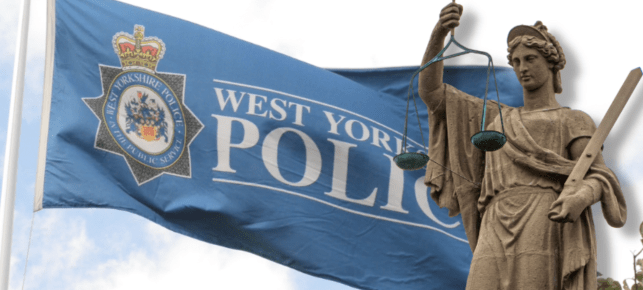
Picture credit: WYP
Right of reply: If you are mentioned in this article and disagree with it, please let me have your comments. Provided your response is not defamatory it will be added to the article.
© Neil Wilby 2015-2023. Unauthorised use, or reproduction, of the material contained in this article, without permission from the author, is strictly prohibited. Extracts from, and links to, the article (or blog) may be used, provided that credit is given to Neil Wilby Media, with appropriate and specific direction to the original content.


Leave a Reply